Monday, March 27, 2006

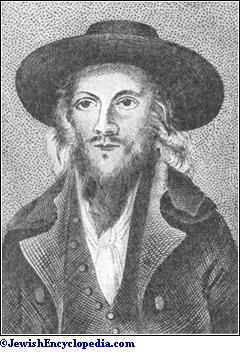
Israel Abraham George Gordon


Before ....................................After

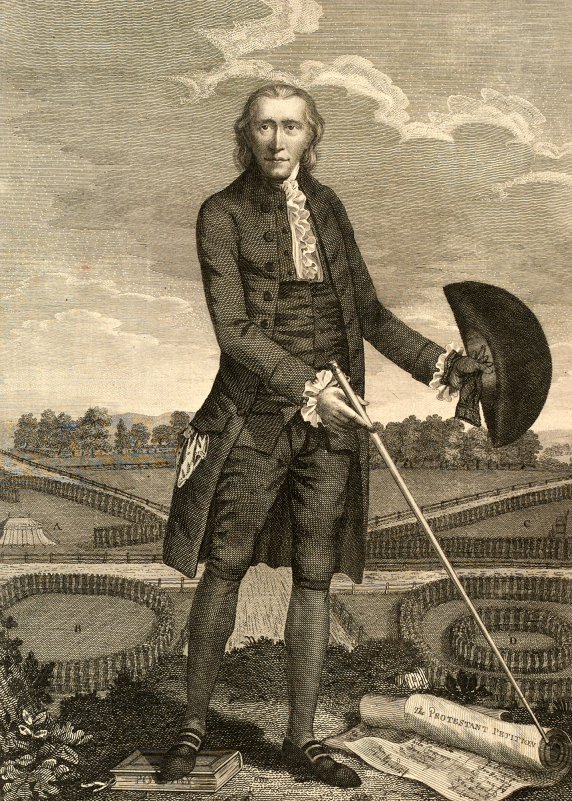
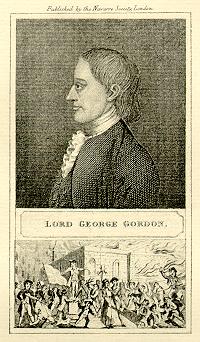
One of the most well known political figures in late 18th century England was a political radical (and radical Protestant) called Lord George Gordon, 1751-1793 (according to Wikipedia, his father was named Cosmo George Gordon. No, you can't make this stuff up!). In July of 1780 he led a crowd of 50,000 people in a protest march to the House of Commons and a riot broke out for five days, for which he was held responsible by the law. He eventually served five years in prison, but not before converting to Judaism, which is a whole 'nuther story.

There is a popular book for children about him:


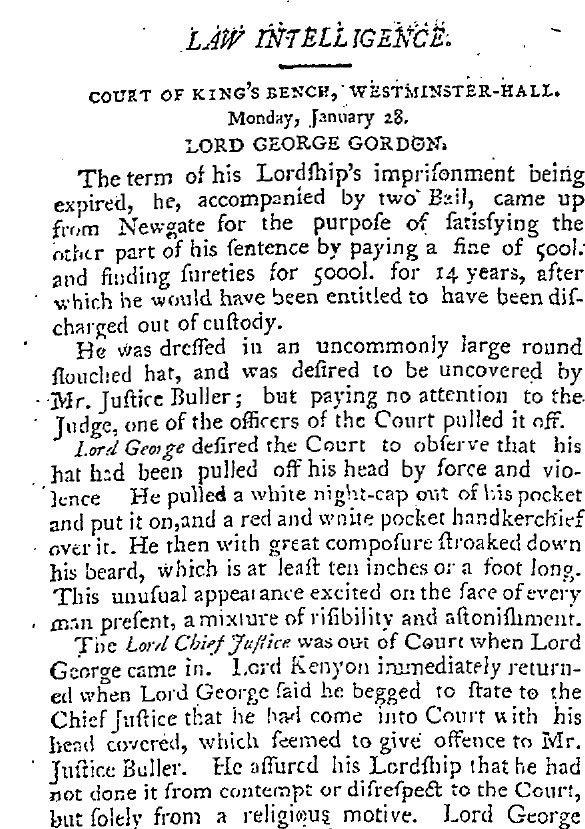
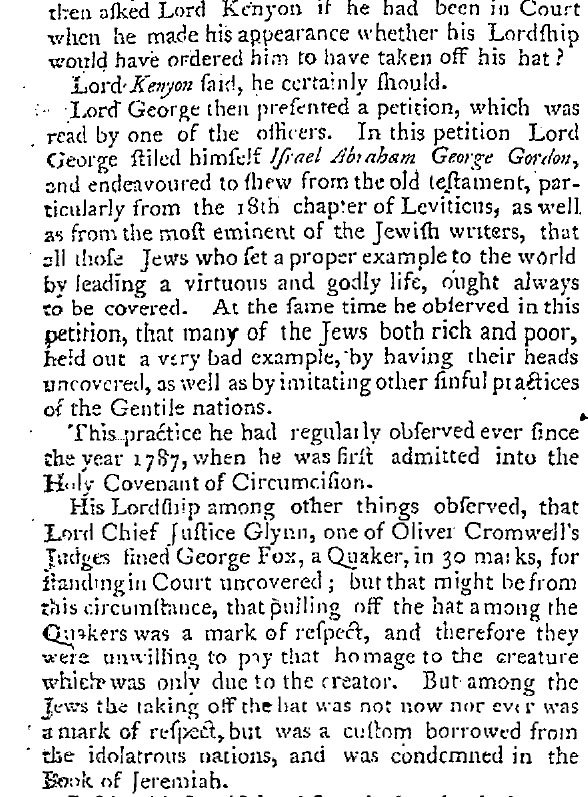
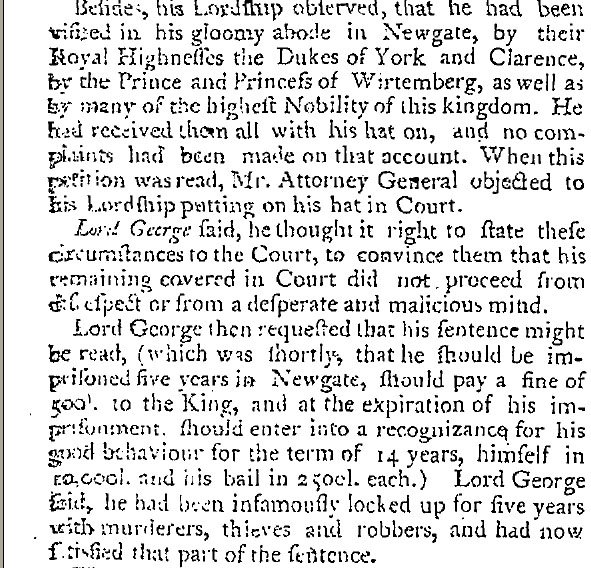
He appeared in court on January 28, 1793. Here is the Times' account of it the next day. It is well worth reading (just click the images to make them bigger if need be):


In prison caricature, from David B. Ruderman's 'Jewish Enlightenment in an English Key'):


And another one, from 1780:

How to read Hebrew without points (nekudot)

One of the most hotly contested issues in Hebrew studies in the 18th centuries was what the authority of the nekudot were in reading Hebrew (specifically in reading the Bible, but also more generally in understanding Hebrew). Theology never strayed too far from the debate, even if it also touched on scientific matters. In short, those who wished to have maximal freedom in interpreting the text denigrated the nekudot, while those who wished to place maximal trust on the textus receptus idea, the Masoretic Text, lauded them. The debate touched on many other points (no pun intended!) relating to the authority of tradition and human interpretation of the Bible (seen as favorable to the Roman Catholic Church) or whether to rely on sola scriptura (a popular Protestant position). In addition, a whole crew of idiosyncratic Bible interpreters accepted only the consonants of the Hebrew Bible, and thus, of Hebrew, in order to create towers of implausible Hebrew philology some of which are truly amazing (and wrong).

In the 18th century many Hebrew grammars were published. All of them bore titles like "Hebrew Grammar...with points" or "....without points" and even some "with and without points." It was practically a genre.

One such grammar was published by an anti-pointist Anglican clergyman named Anselm Bayly (1718-1794) (here is music book he wrote for sale with some info about him). It was called A plain and complete grammar of the Hebrew language, with and without points, published in London in 1773.

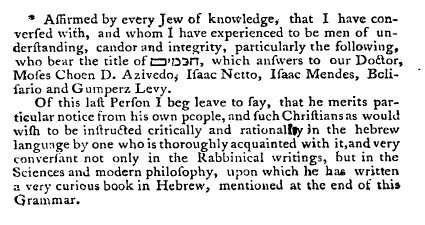
In the preface Bayly writes that "the hebrew hath never been totally dead; it is alive to this day in the mouths and understanding of the wise and learned Jews who all over the world can converse with each other, and write in biblical ad well as in the rabbinical hebrew. This is a fact*

the asterisk leads to the following footnote:
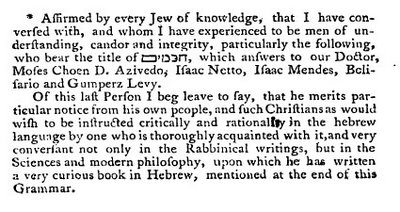


Bayly continues making his case for the Jews knowing their Hebrew: "It is certain, that the hebrew was pronounced, and its grammar understood by the Doctors at Tiberius in the third and fourth century, otherwise they could not have taught it to Origen and Jerom..."

What is he getting at? That Hebrew is a living language and those who know it can read it quite easily...without nekudot. Therefore they are unecessary.

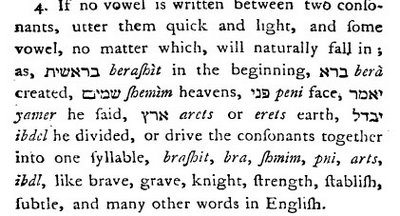
Of course he has to explain how to read Hebrew then. He does so as follows:


...

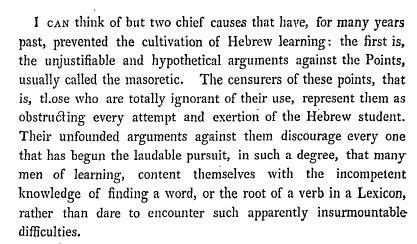
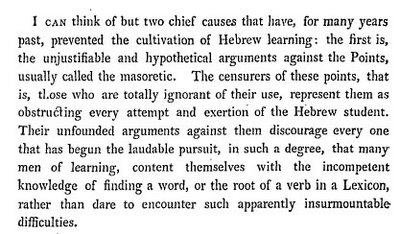
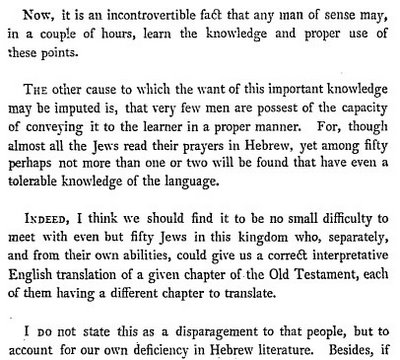
What sort of responses this kind of thing evoke? Here is one in a book called Jonah, a faithful translation from the original: with philological and explanatory notes by George Benjoin (the only info I have so far found about him is that he taught at Jesus College and in 1794 an Act of Parliament naturalized him as a British citizen. The book itself is worth a future post, as it is filled with gems. Here is what he has to say on the matter:

Friday, March 24, 2006

Cross Currents columnist Shira Shmidt takes Cross Currents columnist Eytan Kobre to task for his single-minded obsession with Conservative Judaism bashing. link

Never too late

There was a nice article in the J Post yesterday about a 75 year old man who received semicha. What an accomplishment!

Thursday, March 23, 2006

On Shabbetai Sevi--a near contemporary account

Here is an interesting account of Shabbetai Sevi by a French traveler named Jean Dumont, baron de Carlscroon (1667-1727). The letter was written from Izmir/ Smyrna in 1692 when he was traveling through the Middle East (the Levant). It was published in French and then in English translation in London in 1705 under the title A new voyage to the Levant: containing an account of the most remarkable curiosities ... with historical observations ... By the Sieur du Mont. Done into English ; and adorn'd with figures.. (Incidentally, on the very next page there is a nice bit of antisemitic stereotyping.


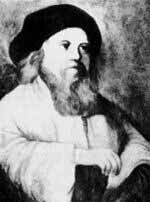
What did R. Yisrael Salanter look like?

No photograph of R. Yisrael Salanter exists, apparently by design on his part. But I heard from a reliable source that his son, R. Yitzchok Lipkin is said to have looked very much like him, as sons sometimes do.

I tracked down a picture of R. Yitzchok. This would seem to be the only way to get an idea of what R. Yisrael looked like. So here it is:


And I would just supplement this photo with a wonderful description of R. Yisrael in Mekor Baruch (this is from the excerpted English translation, My Uncle the Netziv:
I remember one particular incident that left a deep impression on me, as well as many far older and wiser. I was sitting in the beis hamedrash, as was my daily custom, talking and learning with one of the young boys I had befriended, when suddenly an old, distinguished-looking man walked in wearing immaculate rabbinical garb without a spot or wrinkle. His whole bearing exuded complete order and cleanliness; he literally sparkled from head to toe. It was truly a pleasure to look at him. His facial expression mirrored his uniform: he had a shining face and perfectly combed hair. Obviously, he was a very important, highly regarded individual.

My friend and I, who had become accustomed to seeing all kinds of eminent people coming into the beis hamedrash, were not too excited at his appearance. We assumed that he was just another Rav, not unlike all the others who passed through Vilna, until two strange things happened which made us take more notice of him. The first was the unusual way in which the shammas of the shul came over to him after he had taken his place at one of the tables that stood along the wall. After speaking to him with the utmost reverence for a few moments, the shammas walked out and returned a few minutes later with a bundle of handwritten manuscripts which he handed over to him. The distinguished guest, who had swept away any particle of dust from the bench before sitting down, took a lustrous silk yarmulke from his pocket, took off his hat, placed the yarmulke on his head, and began to study the manuscripts intensely. We had never before witnessed this kind of greeting from the shammas and began to see that the man before us was indeed extraordinary.

The next thing we noticed was how, from moment to moment, other noteworthy individuals began to gather around him: Torah scholars, rabbis, and other respected men of the community either took a seat near the man or stood in front of him, all of them displaying a great deal of respect for him. About a half-hour later, the man was surrounded by people who were listening with rapt attention to every word he said. At this point my friend and I allowed ourselves to go and stand among the crowd. By now extremely curious as to who this person was, I pushed my way in close enough to hear the conversation. As I got closer, I heard them discussing the greatness of the Vilna Gaon. They were describing his profound wisdom in all areas of the hidden and revealed Torah and how it far surpassed that of his generation...

(it continues for a couple of pages, an old man recollected the Napoleanic wars and how the cemetary in Vilna was almost impacted with the a decree from the French that the cemetary be plowed over to make way for a flat terrain for their troops, but the tide of the war changed and it never happened, and the people of Vilna attributed it to the merit of the Gra, interred in the cemetary, then the guest made remark about how the Gra's body would doubtless have been without decay and that it would be a "very small thing for the Chosid.")

...At this point I could no longer restrain myself and asked around as to the identity of the guest and was told he was none other than HaGaon Rav Yisroel Salanter. The manuscripts brought to him by the shammas were the handwritten manuscripts of the Vilna Gaon himself!

Wednesday, March 22, 2006

Good stuff at the Joods Historich Museum

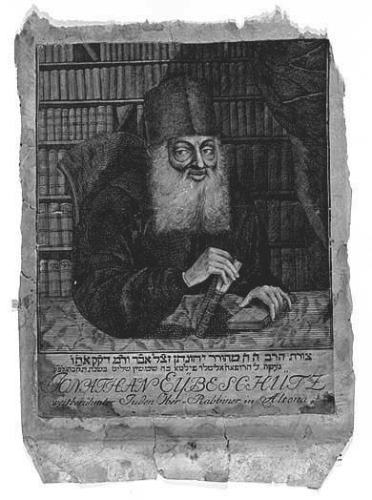
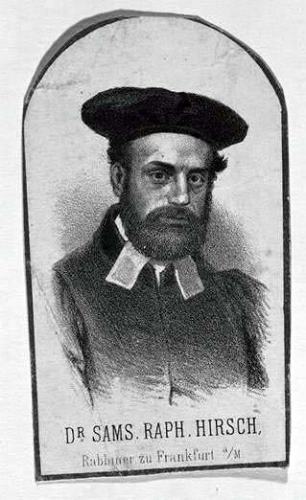
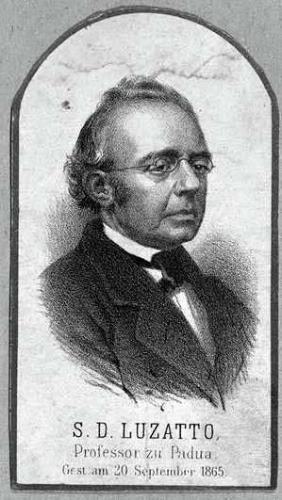
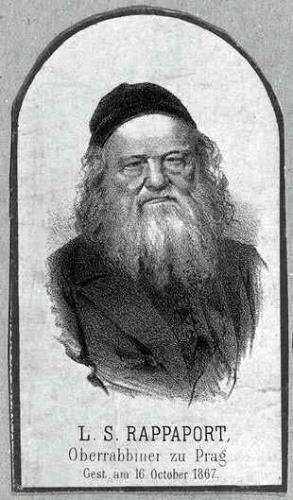
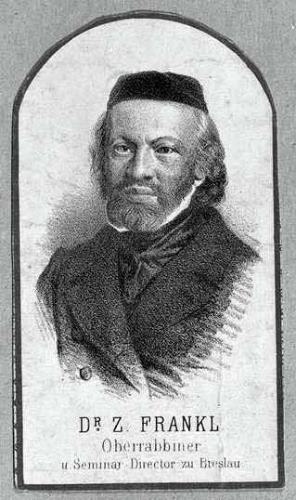
It's great what you can find online if you know where to look (or get lucky and stumble across it!). Here are some interesting pictures from the Joods Historich Museum in Amsterdam:


R. Yonathan Eybeschutz (from 1765)


Another of R. Eybeschutz (no date as I can tell).


UPDATE (3/24): a third of R. Eybeschutz, this from 1764.


The Gra, this one is from 1797!


R. Samson (ben) Raphael Hirsch.


Shadal (R. Shmuel David Luzzatto).


Shir (R. Shlomo Yehudah Rapoport).


The above four pictures came from a photo published in 1868. It features, best as I can tell, Moses Montefiore in the center and the above as well as other rabbis, Orthodox and non-Orthodox.


The caption on the picture is "Gallerie ber?hmter und verdienstvoller M?nner in Israel, des gegenw?rtigen Jahrhunderts," which Babelfish thoughtfully told me is German for "Gallery of famous and deserving men in Israel, the present century."

(edited to add R. Zecharya Frankel)

edit: R. Jacob Emden:


Searches that find On the Main Line

Semi regular post, of actual searches which people used to reach my blog:

"SAUL LIEBERMAN and the orthodox"
mishnayos
chaim berlin
(lingua sacra)
chaim berlin yeshiva
aharon rakeffet
ruach hebrew studies b-hebrew
picture of priest during midieval times
aza and hebrew
julius wellhausen anti-semitic
jewish observer levy
"old v. young" AND Literature

Tuesday, March 21, 2006

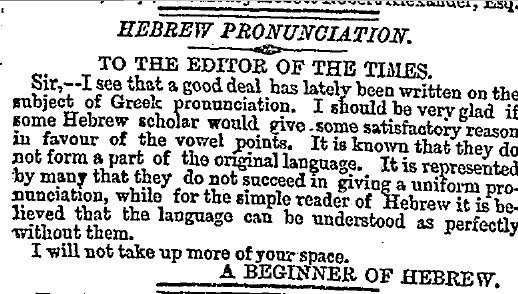
They don't make letters-to-the-editor like that anymore

From The Times of London Saturday, Jan 28, 1865; pg. 7; Issue 25094; col G:


Strictly speaking this is seventy years out of date for this blog, but I couldn't resist posting it, or shall I say, couldn't refift pofting it.

edit: Here is A Begginer of Hebrew's letter:

Separated at birth?


Abraham Geiger pggfffff...ff.;Ozzy Osbourne

Rabbenu Peter?

(Gittin 8a) "...תוס' ד"ה רבי יהודה אומר: שאל רבינו פטר לר"ת"
"Rabbenu Peter (?) asked Rabbenu Tam..."

In four or five places in the tosafos on Shas a Tosafist called רבינו פטר is quoted. Usually פטר is vocalized "Peter," for it is assumed that was his name. While non-Hebrew names are certainly not unusual for rabbis and regular Jews of every era, we don't often find rabbis that share a name with an apostle, certainly not in medieval Europe.

This רבינו פטר was in fact named פטר בן יוסף and was a talmid of Rashbam and Rabbenu Tam. He was also rabbi in Kaernten in Austria and died there in 1146 during the 2nd Crusade.

The name seems strange, even allowing that in Talmud Yerushalmi a R. Yose ben Pitros is mentioned--sometimes that name is given as פרטא, פטרון, or פנחס. In short, there is room to doubt that R. Yose's father's name was some variant of Peter, but even if it was the possibility of copy errors here suggest that the name was very strange. And we've still got to explain why a baal ha-tosafos was named Peter. The relationship with Christians was certainly of an entirely different dynamic in the time and place of the Tosafists. There is otherwise no example of a Jew named Peter in the Middle Ages. In fact, this name would seem quite verboten, if you consider how R. Yehuda Ha-hassid quoted the name in Sefer Hassidim:
"כמו שמעון כיפה שאומרים פטר חמור"
According to H.J. Zimmels (JQR Vol. 48, No. 1. (Jul., 1957), pp. 51-52.) this is all one big mistake. The name פטר should be vocalized "Pater," the common translation of the name "Abba." In the Middle Ages Hebrew names were often translated into Latin (e.g., Justis for Zaddok, Vivacius for Hayyim). If so, perhaps Rabbenu Peter ben Yoseph was actually named Abba (at least at his bris!), and he was really Rabbenu Pater.

Monday, March 20, 2006

Ahh!! Cognitive dissonance!!!

From Deiah Vedibur:
Who Was R' Shlomo Dubno?

In the past, many considered Reb Shlomo [e.g., Solomon Dubno] to have been one of the infamous Berlin maskilim because at one time he collaborated with Moses Mendelsohn, the father of haskalah. The problem with this theory is that later, when Dubno was about to publish a Chumash with his own commentary, he received letters of approbation from many great rabbonim, including the greatest among the Vilna Gaon's talmidim, the brothers Reb Chaim and Reb Zelmele of Volozhin.

Wednesday, March 15, 2006

Here is a very interesting post on masturbation, the great white elephant in every Orthodox teenager's living room (and yeshiva). Note that the post doesn't discuss this issue from an Orthodox perspective, meaning, a lot of people might read it and have a problem with some of the assumptions in the post. But the fact is that such a 'post,' or article or treatment of any kind that deals with this frankly taboo subject from a perspective that is Orthodox and in some sense, healthy, simply does not exist. And that is in large part the point. As far as I can tell (having been an Orthodox male teenager) this is an issue. A quote:
So there you have it, straight from the Talmud: At the young age of 15, the typical boy is already committing murder and/or idolatry several times a week, and perhaps several times a day.
And this is exactly what many young people are going through, and they're going through it mostly in isolation, many of them unaware that there are 200 other murderers in their school alone.

As far as I can tell this problem, from whichever angle you examine it and whatever your view is, is almost totally not spoken of.

What is English Hebraica about?

Here is an excerpt from the introduction to Jewish Englightenment in an English Key by David B. Ruderman. It is wordy, but I could not put it better if I tried. Well, actually, I probably can put it in fewer words, only not better.

It captures perfectly the spirit of the time, the 18th century, and the place that English-speaking Jews were in. This is the true backdrop for this blog. I was planning a post along these lines, but lo and behold I discoverd Ruderman's excellent book. In his intro he basically said that this entire topic is virtually unknown and virtually unexplored, which is why he wrote his book. I noticed that myself, which is why I began this blog! But it turned out that I was beat to the punch. Ruderman's book was published in 2000, while I only recently discovered this wealthy topic.

Anyway, I truly cannot expect readers to read such lengthy excerpts (if I am to judge by my own blog-browsing habits). Given that, I will post a shorter, chewed up version of this post at a later date. It will explain the zeitgeist behind this blog. Hopefully readers will at least read the text I bolded.
What uniquely marks the intellectual life of Anglo-Jewry in the modern era is the process of translation into the English language....English Jews living in the eighteenth century, increasingly native-born, felt the acute need of approaching the literary sources of their culture in the only language they eventually could understand, in English. With the relative decline of Hebrew, Spanish, Portuguese, and even Yiddish as Jewish spoken and written languages, Anglo-Jews, to a degree unprecedented in the rest of Europe, became monolingual....

....In a society that allowed its Jewish minority a relatively higher degree of social integration than anywhere else in Europe, where many professional, educational, and social barriers had practically disappeared by the end of the eighteenth century, despite the failure of the Jew Bill of 1753 and despite a residue of public hostility to both the Jewish upper and lower classes, linguistic assimilation into the English language proceeded rapidly, in the course of one or two generations, across all classes of English Jewish society. The handful of Jewish educators attempting to offer their constituencies an essential textual knowledge of Judaism eventually succumbed for the most part to the weight of this pervasive diminution of Hebraic literacy. Their only recourse was to undertake a massive project of translating the primary sources of their tradition into the language Anglo-Jews could comprehend. Young Jewish students educated in the home, in the synagogue, and in Jewish schools were soon mastering their prayers, their Bible stories, their normative rules of Jewish conduct, and their smattering of rabbinic wisdom through English translations. By the end of the eighteenth century, most English Jews thought about their identity almost exclusively in non-Hebraic, English terms....

As Anglo-Jews sought to define their religious and cultural identity within a linguistic frame of reference, a kind of English playing field, so to speak, common to both Christians and Jews, the ultimate issues that concerned them, the way they reflected on themselves in relation to the other, and their social and religious aspirations were all thoroughly affected. In a society where the English Bible was central in defining the character of the nation as a whole, English Jews became indistinguishable from their Christian counterparts in learning to appreciate sacred scriptures through the agency of the official King James Version. But some soon discovered that the English Bible was not necessarily an authoritatively Jewish one, and that translation could often distort the original meaning of a text, blurring the traditional boundaries that had separated Jewish from Christian readers and believers. If the translation was inferior or theologically spurious, how could a Jew who knew better sit silently by without objecting to the obvious violation of the text and its originally assigned meaning? At the very least, the official English translation had previously been dependent on a traditionally Jewish Hebrew version, the Masoretic text. In an age where Christian clerics were mastering the Hebrew language in an effort to translate anew the original in order to bring it closer to its "authentic" Christian understanding, and when they even questioned the reliability of the Masoretic version, the matter became more complicated for Jewish rabbis and educators alike. Did Christians actually have the audacity to claim that they could understand the Hebrew text better than Jews, the original guardians of the text? If the Hebrew Bible could be made accessible to Jews and Christians alike in English translation, which translation was to be used? And who had the ultimate authority to determine the true meaning of the text in translation, to interpret the authentic words of God?

In the new intellectual world of Christian scholars and clerics armed not only with Hebraic knowledge but also with a new array of paleographical and linguistic methods of reading the text, it became increasingly difficult for the Jews of England, at least their most highly educated, to claim a commanding position as the proper transmitters and interpreters of the Holy Bible. In a Jewish community that had virtually translated itself into an English religious and cultural entity, the challenge of a new Christian ascendancy of master translators of the biblical text, along with their new prerogatives claiming exclusive Christian ownership of the text, was felt acutely and painfully by Jewish leaders and educators. German Jews were to experience a similar encounter with the new Christian biblical scholarship and its alarming claims to undermine the traditional Jewish hegemony over the Hebrew text. But English Jews encountered this threat more directly and more profoundly than others given their already considerable stake in reading and studying the Bible in English translation.


The Ba'al Shem Tov

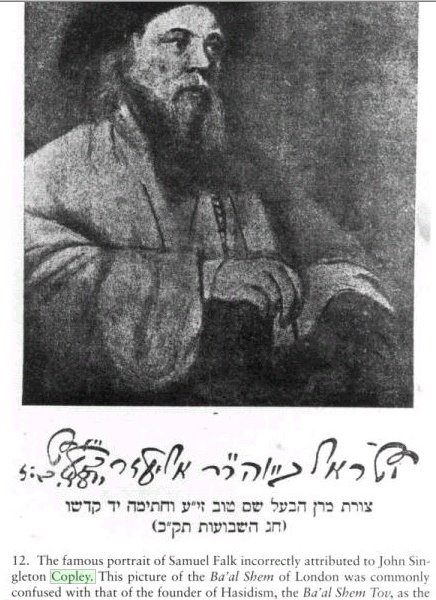
Wikipedia's entry on the R.Yisrael ben Eliezer, the Ba'al Shem Tov, includes this famous portrait:


Only trouble is, this isn't a portrait of the Ba'al Shem Tov. It's a portrait of Hayyim Shmuel Yaakov Falk (1708-1782), the so-called Ba'al Shem of London. A copy of this portrait has been widely circulated as one of the Besh"t (there is no such portrait) for a very long time.

According to the Jewish Encylopedia the portrait was painted by John Singleton Copley, but David B. Ruderman disputes this (I don't know on what basis, but I suppose he did his homework):

Monday, March 13, 2006

Yated explains their policy on biographies

Full text is here.

Overall, not a bad piece. Brings up some good points, such as that the audience a biography addresses matters. An excerpt:
The quality of the work varies as it does in any area. At Yated we set our standards high and we believe that we generally meet or beat them. In any case mediocrity is deplorable, but it is by no means unique to the field of biographies of Torah giants.
Read the whole thing.

Towards the end a certain policy that has been noted by critics is addressed. Call it the hagiograpy clause:
A related complaint that is sometimes made is that we leave out information. This is true, but the reason is that in our Torah-based scale of values, the harm or embarrassment that can be caused to someone — perhaps a family member or bystander — rates much higher than the needs of the historical record or journalistic objectivity. The actual or potential tears of a widow or an orphan weigh very heavily, and we unhesitatingly withhold any information or anecdote that may cause such pain. Even after we take this out, there is always plenty of material for our readers.
This is not something to scoff at on the face of it, but it remains to be seen if actual or potential tears are really averted when people's lives, ideas and ideals are edited in this newspaper for popular consumption.
Full text of the Jewish Observer's piece (The Jewish Observer, January/ February 2006) by R. Dr. Levi mentioned here is available here.

Friday, March 10, 2006

From a student in Chaim Berlin to his Rosh Yeshiva, R. Aharon Schechter

I received this letter, sent to R. Aharon Schechter, rosh yeshiva of Chaim Berlin, by a talm?d of that yeshiva:
I am currently a talmid in Chaim Berlin Yeshiva. One might call me more scientifically oriented but I would call it a rationalistic orientation. A number of years ago I decided to investigate how statements in Torah and Chazal correspond with current knowledge of geology, paleontology, ancient history, archeology, biology, genetics, etc. (all this happened years before I found many of my questions answered in Rabbi Slifkin's books).Well, there is a big gap in between them. Before I proceed, I should mention that I not only read books in these subjects - I also read the evidence on which these sciences are based and also I read books (usually but not always written by fundamentalist Christians or (lahavdil) charedi scientists and laymen) which write critiques on all of the mentioned above scientific fields; at the end I compared the evidence for these sciences and against it. In many many cases I feel that geology, paleontology, ancient history, archeology, biology etc. are based on very solid grounds. I had a major problem that Torah (seemingly) says one thing and evidence/reason says completely the other. I tried to find some Jewish literature which discusses these subjects.

Here is what I found:

A) First of all, and the most unnerving, is that there is almost no material on how to deal with all these problems. I say the most unnerving" because I feel if people do not want to write about it - it means that these are real problems and we have no answers to them.

B) Second - the books that do discuss some of these issues, for example "Eye of a Needle", "Permission to receive", "Genesis and Big Bang" (which by the way was intended for the Christian public) and others have the following flaws:
a) are well written scientific works but only undress one contradiction at best and leave very many more questions unanswered.
b) I would call it pseudo-scientific (meaning they try to resolve the contradictions of Torah and science by using science which scientists themselves would laugh at and they do). For ex. so-called young earth/creation science. I do not want call these frum Jews liars but they present false information.
c) A lot of material found in this book is plagiarized from Christian writings without quoting their sources. I call it a form of theft in some sense. For example some books say that earth was created old looking (I am aware that there are Midrashim who say Adam was fully created); however this idea of old looking earth actually is called Gosse Theory who was I think was a priest and published his ideas in 1850's. I think that person who said the idea first, and somebody else took it from him, must get credit. So many book are copycats.

I was greatly distressed by these contradictions. I think that if a person knows very little about earth/human history it is very easy for him not to be bothered by these questions. To say it mildly - It's a BIG PROBLEM IF EVEN THE VERY BEGINNING of our holiest seforim contradicts everything that we know about earth history (one can only then wonder about the rest of the sefer). My general experience is that the less people are bothered, the more ignorant, uneducated they are (there are exceptions). Small point on the side - a person can have a PhD in math, physics, computers etc. and still know zero on earth science and history; and many who think of themselves as very educated really know zero in these other areas.

Now I do not think that I would become (Chas VaShalom) less frum because of this, however these unresolved contradictions made me more in doubt, nervous, especially, as I mentioned above, the deafening silence of Jewish books on these issues. I strongly suggest for anyone who wants to understand me to read a good geology or paleontology book. I think any honest person who will research these fields will have many questions.

Boruch Hashem - a few years ago I found Rabbi Slifkin's books that deal with many of these contradictions. In Rabbi Slifkin's books he answers many questions that I had - such as that the geological and astronomical facts do not correspond to the order listed in Bereshis or to the order mentioned by the Rishonim; spontaneous generation; and many other questions. Most importantly I had found Rabbi Slifkin's books to be scientifically correct and he does not "steal" from Christian writers. Rabbi Slifkin's books strengthened my belief in Torah and Chazal tremendously and eliminated most of my serious doubts.

In December of the previous year I saw my Rosh Yeshivas shlita letter against Rabbi Slifkin. I was and still am extremely hurt and disappointed by it. I am sorry that my Rosh Yeshiva again attacked Rabbi Slifkin. Finally I had found answers to a lot of my questions and now my Rosh Yeshiva shlita is attacking Rabbi Slifkin. As I mentioned above, I strongly suggest for the Rosh Yeshiva shlita if he wants to understand me to read a good geology or paleontology book. The Rosh Yeshiva shlita may not be bothered by many of these questions but I am. I always wondered if the Rosh Yeshiva shlita had been born in an good catholic, Islamic, atheistic or Hindu family would he ever recognize the truth is not what they would teach him. Or maybe he would just become instead of Rosh Yeshiva shlita a great cardinal, mullah, skeptic or Hindu priest. How would the Rosh Yeshiva know that these religions are false? I think that the Rosh Yeshiva shlita would investigate his religion and see if its true. So I think that a person is allowed to ask questions and to get answers.

I think that if the Rosh Yeshiva shlita wants to attack someone then let him first write a good scientific book that resolves these issues in a manner that is pleasing to the Rosh Yeshiva shlita and maybe only then criticize others. I think that is exactly what the Rishonim did - if they didn't like what other one said they wrote different explanations as they saw fit. Ramban did not just attack Rambam on sefer HaMitzvos - he wrote a very big commentary on it. I don't actually expect the Rosh Yeshiva to write books on this subject (I think that he is busy doing other very important things), but people will understand what I mean.

I have greatest respect for the Rosh Yeshiva shlita but I very strongly disagree. I sincerely wish the Rosh Yeshiva Shlita to live to 120 years in good health and most importantly to increase knowledge and Kovod HaTorah in the world. May it be so.

Many of my friends also agree to the points mentioned above.

Talmid of Yeshiva Rabeinu Chaim Berlin.
Interesting.

Thursday, March 09, 2006

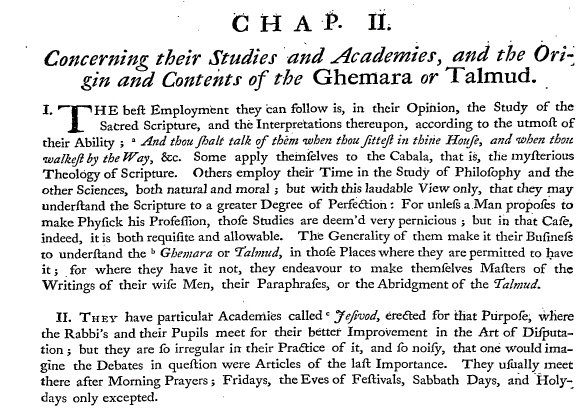
Concerning Jesibot and the Ghemara


This is from the seven-volume "The ceremonies and religious customs of the various nations of the known world: together with historical annotations, and several curious discourses equally instructive and entertaining" (its nice to have that kind of confidence about one's own work, isn't it?). Originally in French, and featuring plates by Bernard Picart this comes from the translation published by William Jackson in London, between 1733 and 1739. The translation was made by "a Gentleman, some Time since of St. John's College in OXFORD."

The first volume deals with Jews and Judaism and is a treasure trove of interesting material. This excerpt is particularly interesting, not only because it discussed yeshivot ("Jesivod"), but also because it alludes to a historical tragedy: because of campaigns against the Talmud it was possible to speak of "those places where it is permitted to have [the Talmud]," for "where they have it not, they endeavour to make themselves Masters of the Writings of their wise Men, their Paraphrases, or the Abridgement of the Talmud," (Ein Yaakov?).

Exploring the Jewish Observer on R. Slifkin

I haven't read the new Jewish Observer* yet. But realjewishnews.blogspot.com mentions that the latest issue features an article on pg. 50 by Rabbi Dr. Leo Levy which indirectly addresses the Slifkin issue, and perhaps other matters as well. Here is a quote from the article (the only bit I've seen so far):
Although the disciples of Shammai and Hillel were unable to settle their disagreements, "they treated each other with love and friendship" (Yevamos 14b). We would do well to follow their example. This is especially important today, when Divine Providence is hinting to us that redemption may not be far off - provided we permit it to come by eliminating unjustified hatred from our midst. When Halachic authorities deviate from these guidelines, the results can be very destructive. The reader, especially if he has spent time in Eretz Yisroel, is likely to be familiar with ... huge posters, "signed" by great Torah authorities, plastered all over walls and bulletin boards, attacking actions that were approved by other Torah authorities - and attacking them in the most extreme and virulent terms, without ever having discussed the matter with the approving authorities, or even mentioning these - leaving the public confused, if not worse.

A hundred years ago, the founders of Agudath Israel showed the way by convening the spiritual leaders of almost all factions of European torah Jewry ... How sad that in the last generation, it was made to fall apart - at least in Eretz Yisroel.

Resorting to labeling, instead, is much, much easier, but also far less constructive - to put it mildly.

Before we disqualify any idea as totally out of bounds, we should first make sure that not one accepted authority supported it.
Since I haven't read the article I don't want to characterize it one way or the other, apart for taking the liberty of inferring that it does in fact refer--even if only in part--to L'Affaire Slifkin. If it didn't, the article would explicitly say so and those who've read it say that it does not deny that this is an element addressed in it.

So, what's peshat? The Jewish Observer is, after all, the monthly mouthpiece of the Agudath Israel of America, whose policy is ostensibly set by a rabbinic panel called Moetzes Gedolei HaTorah, members of whom recently wrote a letter calling the books in question of "impudent and audacious spirit".

Do you see the quandary? While I don't believe that the Moetzes personally approves articles for publication in the Jewish Observer, it is not exactly a free press. Articles published therein reflect the views of the Agudah, not unusual for a party publication, whose views come from on high.

On the one hand its possible that this article was an oversight, it somehow slipped in under the door and will be strongly repudiated.

But maybe not. As I see it, there are two possibilities. One is simply that American gedolim are in fact tired of the new situation they've found themselves in, that of being led by gedolei Eretz Yisrael. Everyone needs a little autonomy. The other possibility is that this Slifkin maaseh isn't going away. Some of the hamon is upset, clearly. As it stands, this episode will probably receive four lines of text in the 2068 edition of the Encyclopedia Judaica, at most. But like a snowball careening down a mountain, who knows really where it ends? R. Dr. Leo Levy is a prominent rabbi--but he isn't a "godol," and my apologies to him for pointing that out. Publication of this article allows daas Torah-niks to dismiss it entirely, because R. Levy isn't a godol. But the genuinely perplexed and upset laity can feel soothed by this article and everyone wins without anyone changing their mind.

*The Jewish Observer is described as "filled with the views of leading Torah thinkers on current issues."

Wednesday, March 08, 2006

Plugging English Hebraica


Come on, you know you want to visit my new blog!

;)

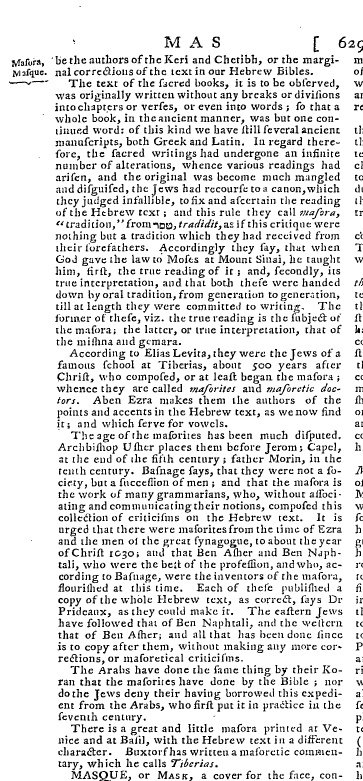
1798 Encylopedia on Masorah

Our Sages say אין אדם לומד אלא ממקום שלבו חפץ (Avoda Zara 19a). Well, one of the fields of learning that my heart desires is that related to the Masorah (מסורת). With this spirit, here is the entry for MASORA in the first American edition of the 18 volume "Encyclopaedia; or, A dictionary of arts, sciences, and miscellaneous literature...," published by T. Dobson in Philadelphia in 1798. The encyclopedia was based on the third edition of the Brittanica, issued between 1790 and 1797.


So far I can't figure out who wrote this particular entry, but I when know I'll update accordingly.

Tuesday, March 07, 2006

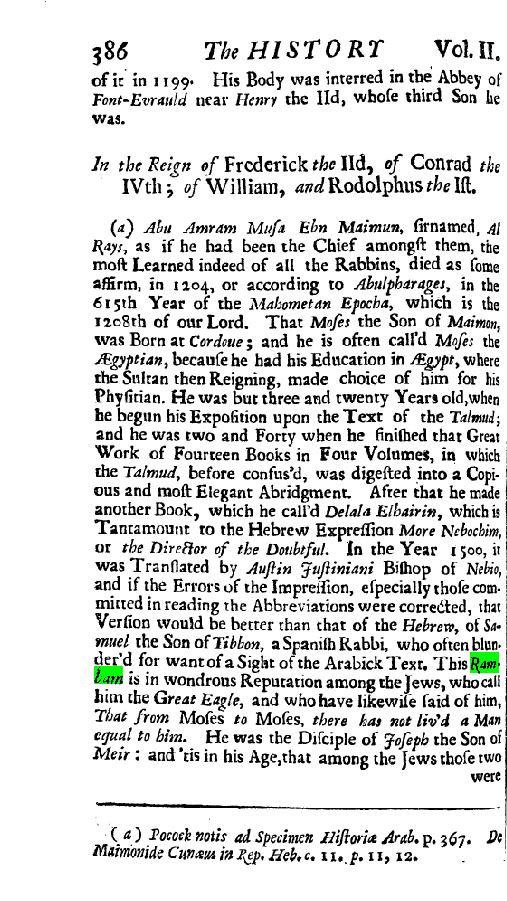
Odds and ends about the Rambam

Here are a couple of early mentions of the Rambam.

The first is from an English translation of an encyclopedia called "Le grand Dictionaire historique, ou le mélange curieux de l'histoire sacrée et profane" by Louis Moréri, published in 1688 under the title "The great historical, geographical, genealogical and poetical dictionary; being a curious miscellany of sacred and prophane history. "


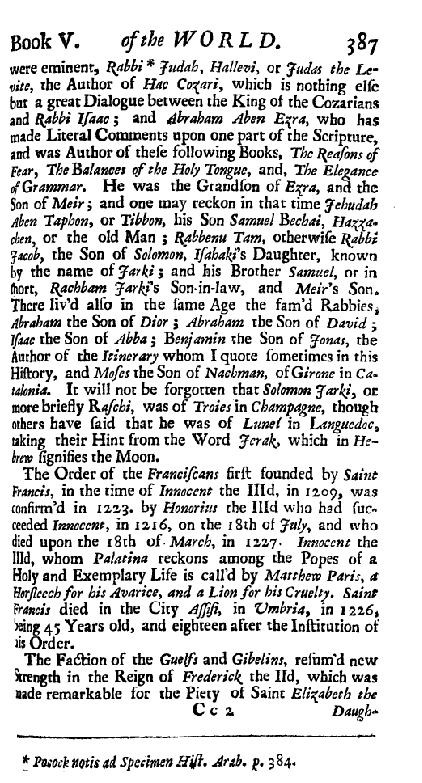
Another view of the Rambam is from Urbain Chevreau's "The history of the world, ecclesiastical and civil: from the creation to this present time. With chronological remarks," (originally Histoire du monde published in London in 1703.


The second page refers to Rashi as "Jarki," Hebraist-speak for Rashi. In this case an explanation is offered that Rashi was so-called because he lived in Lunel. Lunel = moon = month = yarkha = "Jarki."

Stay tuned for posts about the Rambam's views, as seen in early English publishing.
Welcome English Hebraica.

English Hebraica beginsica

I'm still not sure what to call this blog. 'English Hebraica' might not sound exactly right. Anglica Hebraica? Anglica Judaica? Judaica Hebraica?

In any event, I am launching this blog because of these posts at On the Main Line:

I
II

I have long been fascinated by the phenomenon of Christian Hebraism. Why? Basically because Hebraism is a sort of mirror which reflected Judaism and can show how Judaism was perceived in various times and places, misperceptions and errors often, but right on target often as well. There are some surprises in these works and some things reassuringly familiar. It's interesting to trace the awareness of Judaism throughout the centuries. The trajectory tends to be from religiously motivated contempt for Judaism (antisemitism) to interest and even admiration for Judaism (philo-semitism), with varying degrees of normal curious interest in "the other" mixed in. There are historical and theological reasons for these movements, which I hope to post about.

Also illuminating in many of these works are diagrams contained within pertaining to all sorts of matters Jewish. In addition, the transliterations and definitions of Hebrew terms reveal a lot about the perceptions of Jews and Judaism.

In addition to Christian Hebraism, I've also been fascinated by Jewish works in non-Jewish vernaculars. English being my native tongue, this blog will be dedicated to some of them. Until recently I only had scant awareness of how old such works were. I hope to introduce not just myself, but interested readers to some of these things.

Good luck to me!

The young and the beardless*

Yitzchok Levine put up an interesting page which features pictures of various rashei yeshivot in their youth.

*I didn't come up with that myself. I will give credit to the one who came up with it if s/ he doesn't mind.

Monday, March 06, 2006

English Hebraica
Hebraica Anglica

or something.

Coming soon.

William Wotton's English mishnayos--I think I need another blog for this

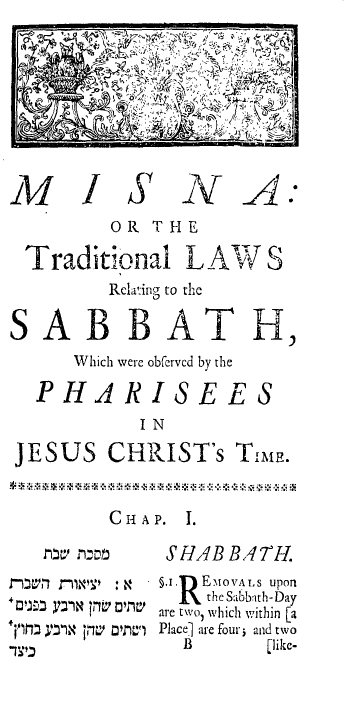
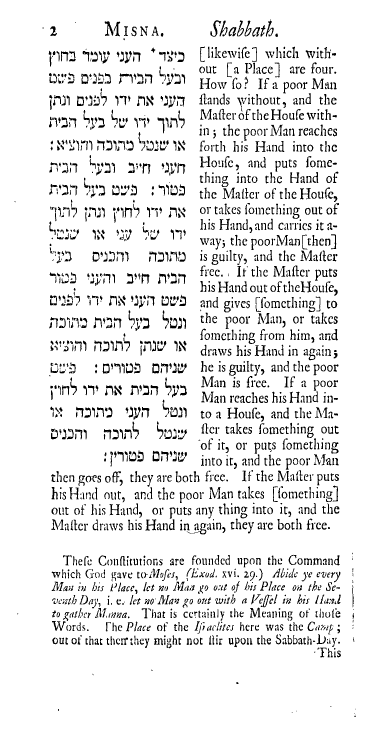
Here are the first three pages of an interesting work by William Wotton, published in 1718. It is a translation of mishnayos Shabbos and Eruvin titled "Miscellaneous discourses relating to the traditions and usages of the scribes and pharisees in our blessed saviour Jesus Christ’s time."

Bet you didn't know there was an English mishnayos 290 years ago!


These things are too interesting and too important not to be more widely known. But these types of posts take up so much space. I'm considering maintaining a second blog for this stuff. Stay tuned.

Sunday, March 05, 2006

English seforim from the 18th century


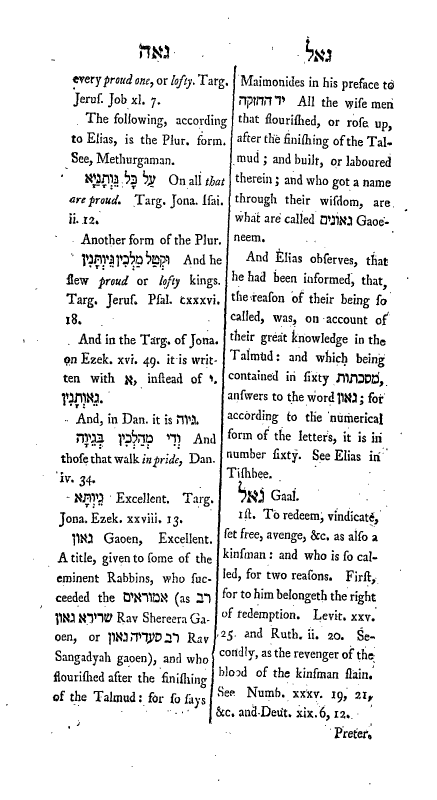
Came across a very interesting work by a David Levi called Lingua sacra: in three parts. It was published in London in 1785-88. This excerpt is from the second volume, which is a Hebrew-English dictionary. Very interesting entry on 'gaon.'

The Jewish Encyclopedia has, for David Levi:
Hebraist and author; born in London 1742; died 1801. He was destined by his parents for the rabbinate; but the design was abandoned, and he was apprenticed to a shoemaker. Subsequently he set up in business for himself as a hatter; but, meeting with considerable losses, heabandoned this business and turned his attention to dressing the material for men's hats. Meantime he continued to pursue his studies in Hebrew, especially in the Prophets.


Levi also wrote a book called Rites and Ceremonies of the Jews, published in 1783. Here is an illustration from the book:


and an excerpt from his chapter on Torah she-be-'al peh:


And on it continues. Very interesting example of 18th century Jewish writing in English (pre-Artscroll).

Friday, March 03, 2006

R. Y. B. Soloveitchik and R. Saul Lieberman

Menachem Mendel posts about an article by Michael V. Fox about critical scholarship and personal religious belief.

Dan comments:
I heard the following story. There was a student at JTS who went to one of the Rav's shiurim. He was blown away when the Rav explained a slight difference in the text between two seemingly parallel passages in the Gemara. He was profoundly moved. He then went back and told this particular thought to R. Saul Lieberman who proceeded to show him manuscript evidence that the entire premise- that there was a textual difference - was not borne out from the manuscripts thus undermining the whole speech and leaving the student rather disappointed.
This reminded me of an incident recorded in R. Aharon Rakeffet's book The Rav (blogged about here). Here it is again:
I remind myself, I had an encounter quite a number of years ago with a representative of the so-called Hokhmat Yisrael. He was a very outstanding scholar. He told me that lately they had discovered a parchment, a megillah, in which it was stated unequivocally that a kohen is enjoined from defiling himself with a sheretz*.

So I said to him: "Do you take it seriously?"

"Of course," he answered, "very seriously." You know, they [the devotees of Hokhmat Yisrael] have the answer right away. It is a different kabbalah, a different tradition. They operate with "traditions" in the plural.

So I mentioned a name to him. The name was known to him, and I knew that he did not like the person. I asked him: "Do you know him?"

"Yes," he answered.

"Is he a scholar?" I asked.

"No, he is a boor and an am ha-aretz mide-oraita," he answered.

I said to him: "So only we have a monopoly on boors and amei ha-aretz mideo-oraita? Fifteen hundred years ago there were also boors and amei ha-aretz. Since there was no paper, the boor had to write on parchment. So you found a nice hiddushei Torah, so what!"
R. Rakeffet repeated this incident with a bit more detail in a lecture available on yutorah.org.

Thursday, March 02, 2006

Artscroll on 'Pharisees'

Mishna Sotah 3:3
; והוא היה אומר, חסיד שוטה, רשע ערום, אישה פרושה, מכות פרושים--הרי אלו מבלי עולם
Soncino Talmud translation:
HE USED TO SAY, A FOOLISH PIETIST, A CUNNING ROGUE, A FEMALE PHARISEE, AND THE PLAGUE OF PHARISEES BRING DESTRUCTION UPON THE WORLD.
Artscroll Schottenstein Talmud translation:
He used to say: A foolish pietist, a cunning evildoer, an ascetic woman and the wounds of the ascetics these are the ruiners of the world.
Gemara Sotah 22B
ומכות פרושין וכו': ת"ר שבעה פרושין הן פרוש שיכמי פרוש נקפי פרוש קיזאי פרוש מדוכיא פרוש מה חובתי ואעשנה פרוש מאהבה פרוש מיראה
Soncino Talmud translation:
AND THE PLAGUE OF PHARISEES etc. Our Rabbis have taught: There are seven types of Pharisees: the shikmi Pharisee, the nikpi Pharisee, the kizai Pharisee, the 'pestle' Pharisee, the Pharisee [who constantly exclaims] 'What is my duty that I may perform it?', the Pharisee from love [of God] and the Pharisee from fear.
Artscroll Schottenstein Talmud translation:
AND THE WOUNDS OF THE ASCETICS etc. [are ruiners of the world]. The Rabbis taught in a Baraisa: THERE ARE SEVEN types of insincere ASCETICS: A SHECHEMITE ASCETIC, A KNOCKING ASCETIC, A BLOODLETTING ASCETIC, A PESTLE ASCETIC, A "WHAT IS MY OBLIGATION AND I WILL DO IT" ASCETIC, AN ASCETIC OUT OF LOVE of reward AND AN ASCETIC OUT OF FEAR of punishment.
As you can plainly see, something's goin' on here. What's peshat, Pharisees? Ascetics? What does the Mishna or the Gemara mean by "פרושין"?

First, it should be noted that in a technical sense the Artscroll translation is correct. A reasonable translation of "פרושין" is "ascetics."

Here's the first definition given by the Oxford English Dictionary for "Pharisee":
1. A member of a religious party within Judaism between the second cent. B.C. and New Testament times, distinguished by its rigorous interpretation and observance of the written Mosaic law as well as the traditions of the elders.
And here is its etymology (skipping some steps that are irrelevent here):
Aramaic pr{imac}{shacek}ayy{amac}, emphatic plural of pr{imac}{shacek} separatist (lit. ‘separated’), cognate with Hebrew p{amac}r{umac}{shacek} separatist, seceder, Pharisee (lit. ‘abstemious, self-denying’
So what we have are two different views. In the one, the world of the OED (and as reflected by the Soncino translation) a particular group of Jews (think of them as proto-Hazal and their followers if you like) existed about 2000 years ago, they were called פרושין, which deservedly should be rendered Pharisees in English. The other view is that 2000 years ago there were people who were פרושין, that is, they were ascetics.

There is certainly some merit to the Artscroll approach, because it is likely that this is how ancient Jews understood the situation, even though Josephus identifies Pharisees as a distinct group, along with the Sadducees and Essenes. However--and here is the rub--even though the Artscroll approach may well be correct, at the same time it is impossible to escape the fact that there is a concept of "Pharisees," and its likely, if not certain, that the Mishna in Sotah is talking about the very same people which Josephus and the New Testament called Pharisees. Artscroll doesn't even hint to this fact, not in its "elucidation" nor in its annotation.

What does the oilam think, is this an error on Artscroll's part? Is this particular bit of translation more confidently Jewish than Soncino's? Should A. have pointed out in the notes the other meaning of פרושין?

"was educated as a Jew" vs "was a Polish Jew"

From the Bowes Park Weekly News Saturday March 14, 1914, obituary for Christian David Ginsburg:
Dr. Ginsburg, the grand old man of Palmers Green, passed away on Saturday last, at his house in Oakthrope-road, opposite the Southgate Council offices.

Dr. Ginsburg was 83 on Christmas Day and was a native of Warsaw. He came to England as a young man....Dr. Ginsburg has two claims to immortal fame. First, he was a distinguished Biblical scholar...

Dr. Ginsburg was educated as a Jew but he adopted Christianity at the age of 15...

A remarkable incident in the doctor's career was the detection of the famous Shapira forgeries in 1887. Shapira was a Polish Jew, with a shop in Palestine, and he sold to the Prussian Government some so-called Moabite potteries, which proved to be forgeries... (italics mine)
Wilhelm Shapira too was a convert to Christianity. Apparently "grand old [men]" were educated as Jews but forgerers remain Polish Jew[s].

Interesting what one finds in 90-year old newspapers.

משנכנס אדר מרבים בשמחה

Download a version of the traditional Negro folksong Pick a Bale of Cotton performed by Leadbelly.

Edit (1.17.08): Watch it:

ADDeRabbi on transliteration, one of my favorite topics. And while we're on the topic, I recommend The conversion of scripts, its nature, history, and utilization by Hans H. (Hanan) Wellisch.

Wednesday, March 01, 2006

Aggadah, Agada, Haggadah, Halachah, Halacha, Halakhah, Halakha

by Snowy Owl (Pamela Greene)

If the Torah's law leaves you perplexed,
Then the learned halacha's your text;
But if it's a peek
At the folklore you seek,
The aggadah's the thing to read next.

Limerick via Larry Lennhoff.

Issues of concern: the truths of history

Google is interesting because it ranks searches in order of popularity, as well as relevence (I'll let the techno-geeks tear my simplistic statement apart in the comments ;-) ).

So, when you do a search yourself you can see just what it is that people are clicking on. So when I typed "yutorah" in Google it showed that second to the yutorah.org home page itself, the most popular page on that site is the seminal article 'Facings the Truths of History' by R. J. J. Schachter (Torah U-Madda Journal Vol. 8).

Maybe I'm misinterpreting the data, but it seems like this is an indication that the reshaping and whitewashing and revising of Jewish history is an issue that concerns more than a few people. Of course one would know that anyway because it is one of the most recurring themes on the j-blogosphere and on Jewish e-mail lists, but here it is in Google. Google does not lie. I think.

What is a yeshiva parent to do?

Anonymous posts a crystal clear comment about the dilemma facing some (many?) Orthodox parents:
Sending a kid to a school with opposing hashkafas is a recipe for disaster -- I speak from personal, and close-second-hand experience. The poor kid, unless he is VERY strong personally, will be pulled in 2 directions, both of which are fraught with existential problems: If he disobeys his rabbeim, he is disobeying God. If he disobeys you he is disobeying God, and in effect spitting on the people you told him to respect and to whom you have entrusted him. And this is just the tip of the iceberg.

LinkWithin

Related Posts with Thumbnails
'