Tuesday, July 26, 2005

Again with the Artscroll! B. Barry Levy's "Judge Not A Book By It's Cover"

At the risk of flogging a very dead horse, there is a very interesting critique of Artscroll by B. Barry Levy that I'd only heard about, but finally read, called "Judge Not a Book By Its Cover", published in Tradition Vol. 19:1, Spring 1981, p.89-95. Now, obviously, it should be borne in mind that this critique is from 1981. 2005-1981=24. That's a pretty long time. However, I think several of his points are still valid, even if Artscroll's projects are done better now and render certain of his criticisms obsolete.
Levy's critique ranges from wishing that Artscroll were something it isn't (i.e., "Artscroll is not modern*....The first volume of the series appeared in 1976, but a recent publication date is no guarantee of being modern. ") to pointing out many errors (i.e., "...what is perhaps most astonishing is the number of plain, old-fashioned mistakes....the Artscroll effort has not achieved a respectable level. There are dozens of cases where prepositions are misunderstood, where verb tenses are not perceived properly and where grammatical or linguistic terms are used incorrectly....These observations, it should be stressed, are not limited to the Bible text but refer to the talmudic, midrashic, targumic, medieval and modern works as well. Rabbinical passages are torn out of their contexts, presented in fragmentary form to enable distortion of their contents).
Levy asks "How these errors have managed to escape the eyes of the many sages whose approbations adorn the volumes may seem somewhat puzzling, but again, it is the presentation of these letters - the Madison Avenue blitz - which makes these documents what they are . Anyone who reads these "approbations"...will see that the rabbis who wrote the letters did not read the commentaries themselves. These letters are more like personal good wishes, character references and the like than testimonies to the work's accomplishments."
That is to say, they are haskamos. Again, wishing something is something that it isn't.
His critique about Artscroll not being "modern" is, frankly, like a critique of Judaism for not being Christian. Artscroll is a Chareidi publishing house (for lack of a better term).
But he raises good points. He notes that "the use of manuscripts on the dustjackets points to some value to be derived from the "human sciences" but careful study of the work shows that the manuscripts never made it past the covers. Frequent citations of inaccurate versions of talmudic, targumic and medieval texts make it clear that vulgar texts have been preferred to critical ones. Artscroll has thus relied on, popularized and to some extent even sanctified certain errors in its desire to avoid being scientific.....Artscroll is making the claim that nothing of value for understanding the Bible is to be found outside the sources which it has used**. "
Further, Levy writes that "Conspicuous by their absence are names like J. B. Soloveitchik, A. J. Heschel. M. Buber, N. Leibowitz, U. Cassuto, A. I. Kook, and M. Schneerson. It is clear that no moderns of suspected heterodox tendencies have been cited, but it would have been useful if Artscroll has defined the criteria for exclusion, as other less desirable figures are cited with approval: e.g. Josephus and Yefet ben Ali, the Karaite."
Come to think of it, in the Artscroll tashlich*** there is a commentary note that quotes the Chovos Ha-levavos quoting (but not attributing)....the Islamic Hadith. (My observation, not Levy's).
Regarding Josephus, Artscroll cites his citation of Berosus, a Babylonian priest born around 350 B.C.E., whose historical writings included an adaptation of the Mesopotamian flood legends. Levy asks, "If Berosus' analysis of the Atra-hasis legend is admissible, why is Cassuto's work on other Mesopotamian texts ignored?"
Finally, Levy accuses Artscroll of essentially plagiarizing material from the Encyclopedia Judaica, modified at times and mentions numerous simple errors, mistranslations, distortions and the like. A lot of ink has been spilled and a lot of electrons have been moved noting these. I don't for sure, but I bet that in a quarter century Artscroll has greatly reduced the number of simple errors and that the quality of scholarship has gone up, although it is also possible that it has gotten errors of the distortion variety down to a science, while Artscroll " presents itself as a 'a Chazal's eye view' of the Bible'".
Anyway....Artscroll is an easy target, and one that probably takes more heat than it really deserves. Partly it is a victim of its own success, but in the main Levy subjects it to fair criticism, even if he is plainly wrong about Artscroll having to be something it simply doesn't want to be.
*Here he means that it rejects all modern scholarship. "Modern Bible study differs from classical study primarily in its attempts to visualize the characters and messages of Scripture in their ancient contexts rather than in their contemporary ones."
**The sources are: "Talmud, the midrashim and the best known medieval and modern commentators: Rashi, Ibn Ezra, Radak, Ramban, Abarbanel, Malbim, Hirsch,. Additional material is culled from the targumim, the medieval philosophers, the medieval philologists, and more than a few important exegetical works which are relatively unknown and worthy of consideration. A large sampling of mussar and hasidic thought rounds out the selection and has, in many ways, shaped the series."
***Pg. 643 of the Rosh Hashana machzor cites the Chovos Ha-levavos' citation of the famous distinction between the lesser jihad (war) and the greater jihad (internal war with oneself).

Monday, July 25, 2005

Women needed

In Expanding the Palace of Torah: Orthodoxy and Feminism Tamar Ross writes that
One of my sons once remarked to me that most of his women acquiantances were much more sophisticated religiously than his male friends. The reason was obvious to him: a Jewish girl raised in the Orthodox tradition realizes from the outset that she must adopt a more complicated relationship to the classic Jewish sources, because so much of the picture of women in the sources simply does not correspond to what she knows herself to be. Like Moliere's Monsieur Jourdain who discovers that he has been speaking prose all his life, Orthodox women are constantly appropriating a nuanced approach to Torah.
Ross goes on to explain that she is not saying that all Orthodox women do this or that among those who do it is usually even a conscious matter.

This is an interesting point. It is relatively easier for a man to take an oft-quoted rabbinic statement like "nashim da'atim kalot", (a MWM), at its simple meaning. That must be less so easy for women, who presumably, must deal with such a ma'amar Chazal, a saying of the Sages, while many men can get away without thinking about it too deeply.

I am reminded of something that is really quite different, but seems appropriate to mention. A Jewish writer of note (don't remember who) said that nothing less than the Blood Libel prevented most Jews from internalizing the demonization and hatred of the Jew throughout the millenia. Every Jew knows that the Blood Libel isn't true and because Jews were charged with this, every Jew knows that he is charged unjustly. But I digress.

Ross's son raised an interesting point, but is it true? I hope to hear from women specifically, although obviously everyone is welcome and asked to discuss this idea.

A "making of a godol" story about zealotry and hooliganism

On shabbos someone told me something he heard directly from R. Mordechai Gifter.

When R. Gifter was a bachur in the Telshe Yeshiva a certain maskil came to town with the intention of lecturing. R. Gifter and three friends would not let this be and had a plan. The four of them each took to a corner of the crowded hall in which the lecture was being given and no sooner had the maskil begun speaking, they all yelled "Fire!". Pandemonium ensued. There is a reason that "shouting fire in a crowded theater" is very nearly the textbook case of the limits of free speech. But the goal of disrupting the lecture was accomplished.

Feeling proud and certain of himself, young R. Gifter was shocked when the Telshe rosh yeshiva called him into his office and made it clear that he was very angry with him. He barred R. Gifter from entering or having anything to do with the yeshiva for two weeks and explained to him that there is a difference between zealotry and hooliganism.

Unfortunately the person who told me this didn't remember what the punchline was, if there was one; what R. Gifter was told the precise difference is. Come to think of it, the story itself is kind of the punchline.

Mordecai Kaplan and the Bat Mitzvah

Cross Currents's Eytan Kobre has evidently been reading some of the recent blog discussion about the Bat Mitzvah celebration as an example of the 20th century adaptation by Orthodoxy to modern mores. There are a number of posekim who discuss the permissibility of the Bat Mitzvah, from the Seridei Esh to the Iggeros Moshe. Kobre is skeptical that Mordecai Kaplan really did "invent" the Bat Mitzvah (although he allows that Kaplan is the "dude who invented Reconstructionism (patent pending)").
How, you ask, do I know the bat mitzvah was Kaplan’s baby? Because, over the years, I must have read the same sentence in at least 5 or 6 different Jewish papers or books, and always with a sober air of authority (those familiar with the literature know that received wisdom of this sort about the Orthodox tends to get regurgitated repeatedly), in roughly these words: “Even the Orthodox have been influenced by the other movements to accomodate modernity*, as in their adoption of the bat mitzvah ceremony first performed by Mordecai Kaplan.” What a gas.
To an extent I agree with Kobre. I don't think that Orthodox Jews who make Bat Mitzvah parties for their daughters are consciously influenced by Reconstructionism. But the Orthodox Bat Mitzvah was not created ex nihilo. It came from somewhere. Unless Kobre can provide a different, plausible point of origin, there is little reason to assume that the seeds of this idea wasn't initiated by Mordecai Kaplan in the 20th century. No one is saying that Orthodox Jews said "Hey, those Reconstructionists (patent pending) have a great idea. Let's make a party for our Chani when she turns 12 just as we made one for Shloimy when he became 13." Or at least I'm not saying it. Sometimes that is how influence works. It is overt. But it is likely-to-certain that this isn't the case here.

What happened was that the Bat Mitzvah celebration was initiated by Mordecai Kaplan and the latent idea was released, as it were, into the atmosphere. Formerly a young lady's ascension to gedola-hood went marked primarily by fasting with the adults. Fast forward 60 or 70 years later and even in chareidi circles (although not in all) a young lady has the occasion marked by, if not a seudas mitzvah, then a party with her friends. This did not happen and probably would not have happened in the 14th century. It happened in the 20th century. Why? Because of external influences and pressures on Orthodox Jews to adapt to the reality that 12 year old girls cannot accept that their transition to halakhic maturity would go unnoticed while that of their brothers would be a communal celebration (to say nothing of a catered affair, another 20th century adaptation to something-or-other).

*In fact there are obvious examples of this, notably the patently-not-controversial-now idea of a rabbi addressing his congregation in the vernacular.

Friday, July 22, 2005

I. Rambam's 1st Principle of Faith

Rambam's 1st Principle of Faith is

To believe in the existence of the Creator, may He be blessed, i.e., that there is an Existence that is perfect (and absolute) in all facets of existence. He is the cause of all that exists, the sustenance of all, and through Him all is maintained. There is no possibility that He does not exist because without Him, all existence would cease to be and nothing would remain. [Whereas] if we would imagine the absence of all existence other than His, the existence of God would neither cease nor diminish. For He is self-sufficient in His existence, He suffices in Himself, and His existence requires nothing other than Himself. [For] among the intelligences -- the angels and the constellations and all that they contain and all that is below them -- they all need Him for their existence. This is the first Principle, as affirmed by the verse (Exodus 20:2) "I am God, your Lord..."

In summary, God exists and is perfect in His existence and is the primary cause of all that exists.
This one is easy. Yes. Well it isn't easy, but if the answer was "no" then I could hardly continue the series.
At the outset I want to mention that even though I think about theological matters a lot and struggle with faith, for whatever reason I've never doubted God's existence or what the Rambam says that implies. I just haven't. Seriously. Evidently, for me, that isn't the issue to deal with. Someone recently told me to "try debating a[n knowledgable] atheist and watch what happens", meaning then I will then have doubts. Actually that doesn't interest me. Not because I'm afraid of doubts, but because it so happens that this is something I've always been sure of.
Why? Don't expect any new ground to be broken here, obviously. I find the Intelligent Design argument compelling. The Talmud attributes this very realization to Avraham's "discovery of God". Now is it evidence beyond a reasonable doubt? Let's put it this way: if I was on a jury I would not have a reasonable doubt. And yet I believe we would have a hung jury, since some would have reasonable doubt.
Now I must be honest with myself though and point out that I am something of a skeptic by nature. I have to recognize that if I wasn't raised religious (whatever the religion) in all likelihood I would not reach the conclusion that God exists from the apparent intelligent design on the intricate universe and all within it. If I had lives 4000 years ago I might have doubted the pagan pantheon, but sadly I must admit that I probably wouldn't have discovered God myself.
This is a bit troubling to me. Doesn't that indicate that socialization is responsible for my belief? Well, yes. But it also tells me that my own skepticism should be employed in doubting myself (until the day I die I could become a Sadduccee ). Since I believe in God and am glad I do that reminds me that leshitasso I should also doubt my own doubts and be cognizant of the fact that there but for the grace of God go I.
The issue of whether God exists is actually quite separate from the issue of whether God is the God of Torah, but that can be addressed by a good point made by Abraham Joshua Heschel

It may seem easy to play with the idea that the Bible is a book like many other books," a "fairy tale," but "consider what such denial implies. If Moses and Isaiah have failed to find out what the will of God is, who will? If God is not found in the Bible, where should we seek him? If God had nothing to do with the prophets than He has nothing to do with mankind."

Putting aside the issue later to be addressed that Avraham didn't have the Bible to discover the God, I believe that is a powerful statement. Are there holes in it large enough to drive a pachyderm through?
Emunah peshuta? Emunah complexia.

Thursday, July 21, 2005

Forthcoming series: Do I believe the Rambam's 13 Principles?

I plan to being a new series of posts--13 in all--in which I honestly examine my own beliefs as compared to the Rambam's 13 Principles of Faith.

I believe that it has been satisfactorily been shown that "the limits of Orthodox theology" lies further afield than often thought. Although it may have been proved (Hirhurim, The Jewish Worker have both dealt extensively with this) that hashkafah is within the aegis of pesak, for the purposes of determining Who Is A Min, a category with halakhic implications, it can only be demonstrated that some posekim will regard deviation from the Rambam's principles as the limit. Other posekim will rule differently.

The fact (or opinion) that the Rambam's principles are not the beginning, middle and end of Jewish theology, of course, does not impact the factual corectness of these principles. The idea of am hanivchar, the chosenness of the Jewish people, is not an ikkar, but I believe it is factually correct.
Yet whether it is or isn't I've no doubt that there are posekim who would consider a person who didn't believe that the Jews were the am hanivchar to believe heresy, even though it isn't on the Rambam's list. The idea of yerodas ha-doros, the qualitative decline of the generations as they recede from the Sinai experience, is a widely held view yet not an ikkar. It may or may not be factually true. But whatever the case may be, it cannot be denied that the Rambam's principles are widely believed to define the limits of Orthodox theology. It also cannot be denied that there are some historical grounds for granting that this is correct.

Now as far as my new series, I plan to really think about each one and let the chips lie where they fall. I will think about them and try to honestly analyze what I believe without a pre-determined answer (read: that I believe). This doesn't mean that I don't know what the answer to some of them are. Take the first one, belief in God (I will post the detailed version of each one with the appropriate post). I know my answer; I believe in this one. But neverthless I plan to engage in introspection and guage what I believe and why for each of the 13.

I said that the chips will fall where they may. That doesn't mean that I want the answers to be "no" or "no, but...." for any of them. But if it will be, then it will be. Am I worried for myself, should that happen? Yes and no. The Gemara writes "yesh koneh olamo be-sha'ah achas", there are those who acquire olam ha-ba'ah in an instant. R. Moshe Feinstein said a person's olam can be acquired with a page of Talmud. No matter if it turns out that my emunah is derailed, I know that the Rachmana allows people to repair themselves. Rachman liba ba'i. I will try to "get good religion" in the words of the real Mississippi Fred McDowell if it takes a lifetime.

Here is the Yigdal poetic rendering of the Rambam's Principles as found in the Metsuda Siddur
  1. Exalted is the living God, and praised. He exists, His existence transcends time.
  2. He is One, and there is no unity like His; He's invisible, His unity is infinite.
  3. He is unlike the corporeal or even the non-corporeal; His own holiness cannot be compared to Him.
  4. He preceded everything that was created, He was first, and there was no genesis to His beginning.
  5. He is Master of the Universe, and every creature proclaims His greatness and His majesty.
  6. The fullness of His prophecy, He bestowed on those He treasured, and in whom He gloried.
  7. There never arose in Israel another like Moses, a prophet who beheld God's image.
  8. The Torah of truth God gave to His people, through His prophet [Moses], the trusted one of His house.
  9. God will not exchange nor alter His Law. Never will He offer any alternative.
  10. He scrutinizes and knows our secrets. He beholds the end of a thing at its beginning.
  11. He rewards man with kindness according to his deeds. He sends evil to the wicked according to his wickedness.
  12. He will send our Messiah at the end of days, to redeem all who await His final deliverance.
  13. God will revive the dead in His abundant kindness: Blessed forever is His praised Name.
I urge other J-bloggers to try this themselves. Let's see what happens.

'Aza, Gaza, mah zeh?

I am rarely at a loss for an opinion, especially about Israel. Yet the only opinion I can manage to muster about the Gaza withdrawal is sadness--not sadness because I think it is a bad move. That is what I cannot, for some reason, form an opinion about. Sadness because whether it is the right thing to do or not, it is unquestionably a sad moment in Jewish history. I just don't know what to think, but I am sad. I can only pray that this be nothing more than a speed bump in the history of the Jewish people and particularly in the life of the affected settlers, rather than a mountain.

But since Gaza is in the news, I thought it might be interesting to discuss why Gaza is called Gaza when it is spelled in Hebrew with an 'ayin. Now, it is hardly a secret to Ashkenazi Jews who do not distinguish between an 'aleph and an 'ayin that there is a difference. Many people know this and would suppose that this is why Gaza is transliterated with a "G". The guttural 'ayin becomes a hard g in English. Not so pashut. Moses' father, Amram, isn't Gamram.

In fact the reason why Gaza is Gaza and not 'Aza is because of Origen's Hexapla. Origen was a 2nd century Christian scholar who wrote an edition of the Bible in six versions side by side; Hebrew, Hebrew in Greek letters, the targum of Aquila, Targum Symmachus, the LXX and Theodotion's.

The column of Hebrew in Greek letters is especially exciting to Bible geeks, because it gives us greater understanding of how Hebrew was pronounced. In the Hexapla, 'Aza is rendered Gaza, notably because the 'ayin sound does not exist in Greek. However he didn't choose the "a" sound, as one would in English. One might think this was purely arbitrary. A guttural can go other way. Take it all the way to "g" or just leave it out. But no, his 'Amram gets the "a" treatment. Why?

In Arabic there is a letter called ghayn as well as 'ayn. The ghayn is basically a harder version of the 'ayn, but not yet a hard g. This letter doesn't exist in Hebrew. But perhaps, perhaps during the 2nd century, at least, there were some 'ayins in Hebrew* that were pronounced like a ghayn and some like an 'ayn. How would a speaker know which was which? Well, they'd just know intuitively. But we don't. It is for this reason that the twin city of Sodom, 'Amorah, became Gomorrah. Gaza, Gomorrah and Amram.

*Or maybe it was an Aramaic influence on Hebrew of the time.

On the Main Line, now with tags:

Is reading Elie Wiesel and Leon Uris an issur de-oraisa?

In The Taryag Mitzvos by R. Aharon Yisrael Kahan Mitzvah, a work based on the Sefer Hachinuch it says in Mitzvah 387 based on Num. 15:39, וְלֹא-תָתוּרוּ אַחֲרֵי לְבַבְכֶם, וְאַחֲרֵי עֵינֵיכֶם, אֲשֶׁר-אַתֶּם זֹנִים, אַחֲרֵיהֶם

It is forbidden for a Jew to introduce into his mind, through reading or otherwise, any ideas that contradict the true Torah values. This includes books, newspapers, magazines, movies, etc. Although the quality of acceptable reading material available might be insufficient to satisfy our knowledge-hungry youth, this does not excusse the reading of anti-Torah literature, just as one may not eat pork, even though no kosher meat may be available. Any Torah-true Jew must forsake the works of the following authors: Ash, Bialik, Buber, Singer, Weisel and Leon Uris, to mention a few. The distorted attitudes and opinions of these shallow minded, non-Torah-true individuals are contradicting to our forefather's [sic] sacred teachings and traditions, and their venomous writing tend to instill anti-Torah values into the minds of their readers, chas v'shalom.

Wow, this is the first time I have ever heard Elie Wiesel's writing called "venomous". Leon Uris?

Wednesday, July 20, 2005

From the bowels of the Avodah list

My apologies to Marc B. Shapiro. Future posts in the From the Bowels Of... series will not focus on his interesting posts, but other interesting points from high level Jewish discussion mail archives.

Shapiro writes

"...has caused me to wonder whether halakhic Jews can really be historians and tell the truth, and I think maybe R. Schwab and others are actually representing Jewish law when they call for censorship. Let me explain.

Let's say in doing research on a sage I discovered that he had an affair or that he spent time in jail in his youth. Presumably, in a biography this should be included, but I think it is clearly a violation of the laws of lashon hara. I guess the case can be made that if these events have no impact on the sage's future life, even from the standpoint of history there is no need to record them as this will needlessly tarnish him to destroy someone, However, most historians would no doubt say that this is a judgment that has to be left to the reader (note the controversy over the Arendt-Heidegger letters and the recent Koestler biography). From a halakhic standpoint, even if this fact was well known at the time, it can't be repeated today, since today people don't know it and especially since it can be assumed he repented. (I say this as someone who knows more "dirt" about certain great sages than he ever wanted to know, all gathered from written sources! Is it "listening" to lashon hara to read something?) This is one problem with writing true history.

Or let's say I discover that a rabbinic sage was a Nazi collaborator (I have not!). On the one hand you could say that this action ipso facto removes him from gadol status and since he did a terrible thing it must be revealed so that no one respects him anymore (uprooting wickedness is a positive thing). Or you can say that he must have repented later and thereofore to reveal it is a violation. In this case however, all historians will agree that it must be revealed. What does Jewish law say? If he is respected in the community, and has lived a good life for 40 years, presumably it is forbidden to reveal this. Thus, one cannot write a good biography of this person. Ergo, true history cannot be written by halakhic Jews.

Getting back to the first case. Let's say this well-known rabbinic figure had a child out of wedlock (there is such a case) and throughout his life had a close relationship with the child, or alternatively abandoned the child and refused to support it. These facts certainly say something about the person's character and it is impossible to write a biography without taking them into account. But would Jewish law permit one to?

There has yet to be an article discussing how one can write history within halakhic bounds. If I discover something negative about a person, which was well known in its time, and thus not lashon hara to repeat 100 years ago, but is today forgotten, according to Jewish law it probably cannot be repeated today. How then can one write history truthfully, exposing the flaws as well as showing the good? Presumably you can't, which is why Artscroll chooses to only focus on the good. It is not just that they are interested in creating hagiographa, but they are no doubt concerned with halakhic strictures.

I don't know where this ends? Presumably it would be forbidden to write a biography of R. Jacob Emden because one would have to discuss all the things he did and said and anyone who does this will come off thinking he is totally mad or thinking that R. Eybschuetz is a total low-life. Religously speaking, both of these are presumably not acceptable outcomes. So is it any surprise that the "Orthodox historian" will ignore the entire dispute?

History is about reporting the truth and interpreting it. If I discover that a certain gadol -- actually why do I keep mentioning gadol, even if I discover about a regular guy -- that he was involved in some event which reflects poorly on him, it seems that it is forbidden to report it. And if it is already publicly reported, then how can one interpret it, and cast judgments, which is also forbidden. How then can one do history? Maybe one cannot? Let's take the story of the Belzer rebbe and assume the worst, what is the halakhic rationale for repeating the story? The rebbe was a gadol and even if he erred in the worst way, or even if you think he "sinned", mustn't one assume that he did teshuvah, so why tarnish his reputation? From a religious standpoint, the Haredi position makes perfect sense, although it is of course not history.

A long time ago I told a leading Orthodox historian that the article he should write is how can halakhic Jews write history without falling into lashon hara. I am still waiting.

Sincerely,

Marc Shapiro

How broad is the umberalla of Orthodoxy?

J-blog newcomer The 37th Tzaddik asks a stimulating question: Is there a Judaism called "Orthodoxy"? He points out that the label includes everything from Neturei Karta to Edah, which is frankly....weird.

Also check out the Godol Hador's Big Question, with very stimulating comments on this subject.

Tuesday, July 19, 2005

Tunder ahead

Der Blatt, the blog that produces the Satmar newspaper's content online (if it isn't the newspaper itself?), says there is a Tunder storm warning.

From Ezra to the Steipler Gaon

For no apparent reason. From Ezra to the Steipler Gaon by Avraham Zvi Antokol.

Is it just me or does the title of this book seem a bit non sequitur-y? I can't put my finger on exactly why.

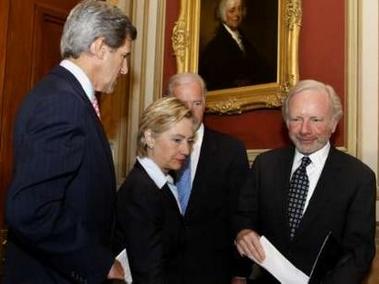
Tznius flap at the White House

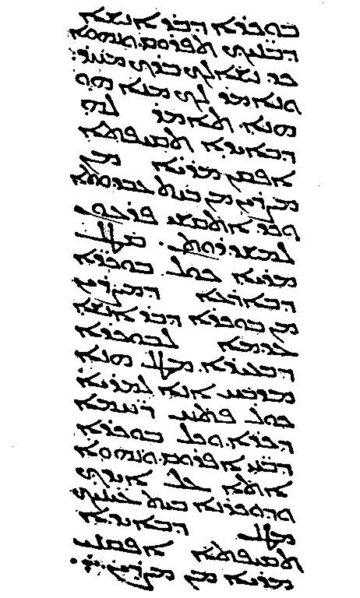
What's peshat with the Peshitta?


There is a very interesting translation of the Bible called the Peshitta. It is written in Syriac, which is basically the eastern dialect of Aramaic--as Max Weinreich famously said ah shprakh iz ah diyalekt mit an armey un a flot, a language is a dialect with an army and a navy. Strictly speaking this isn't true for Syriac, but roughly speaking Syriac is Christian Aramaic, and to the extent that there was a Christendom there could be a completely language called Syriac rather than two dialects of the same language, yesterday called Chaldaic, today called Aramaic. But I digress.


The Peshitta is sort of like the Aramaic targums are, except that it is younger than, say, Targum 'Onqelos. It also was produced by Christians--although there are theories that it actually stems from a Jewish source. R. Chaim Heller (1878-1960), author of Untersuchungen ueber die Peschitta, was of this opinion, although it should be pointed out that the Seridei Esh, who wrote his doctorate in the Peshitta really lambasted R. Heller's scholarship. But I digress.

Any yeshiva bochur knows that peshitta means something like "explanation" although it is also a technical Talmudic term that means, roughly, "duh" (but you have to say it with the proper "I know that already!" inflection).

The Peshitta is useful to Bible scholars (and yes, talmidei hakhamim) because it is an ancient textual "witness" to the Torah.

Update: Devora Khayyat informed me that the Syriac script of the Peshitta is called
Estrangela.

Reduce sexual desire with "nonichai", basil and cinnamon!?

Is this a joke? I'm not sure if I'm speechless or not yet because I'm speechless.

Nonichai, is some kind of a sugar pill (actually, it contains "Noni, Basil, and Cinnamon") and is supposedly being marketed to Orthodox men to decrease sexual desire. And it says it is "Certified Kosher by Vaad Harabbonim of Flatbush"


Reduce Desire

(for men and boys 13 years and older)

Who would get benefit from Nonichai Reduce Desire Herbal Formula? Orthodox Jewish Males at one time or another.

  1. By Jewish law the husband is not allowed to have marital relations with his wife when she is nida (having her period). This may take as long as 12 to 15 days
  2. After giving birth the wife can be nida for many weeks.
  3. Often men have to travel without their wives for extended periods of time.
  4. Boys who are either students or not yet married are constantly bothered and their thoughts are distracted. They would definitely benefit and find their ability to study would be improved if they could temporarily reduce their desires and put their energies totally into learning Torah. Needless to say they could also concentrate better on their davening.
  5. it is well understood that bachelors and divorced men would also greatly benefit by temporarily reducing their desires.
I couldn't make this up.

Rachak explains himself

Young Rachak opens up.
I have to say that there are better influences he could find than the Satmar Rav and the Frumteens Immoderator--but no one can say that he isn't thinking. May his thoughts and study and good influences take him to the shvil zahav.

Monday, July 18, 2005

Joe Lieberman observes halakha be-farhesya


Sen. Joe Lieberman sports his shloshim beard.

Hat tip: The Slippery Slope.

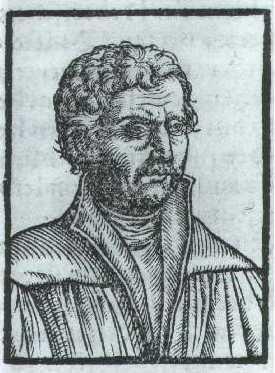
Johannes Reuchlin, Chassid.


Johannes Reuchlin (1455-1522) was a German humanist and Hebrew scholar. He was also one of the chassidei umos ha-olam according to R. Yisrael Lipschutz, the Tiferes Yisrael on Pirkei Avos. Aside from being a really smart guy and a talmid of the Seforno, he was also a passionate defender of the Talmud when it was under attack from non-Jews seeking to discredit it as a book of blasphemy.

In the words of Wikipedia
Many of his contemporaries thought that the first step to the conversion of the Jews was to take away their books. This view was advocated by the bigoted Johann Pfefferkorn (1469-1521), himself a baptized Jews. Pfefferkorn's plans were backed by the Dominicans of Cologne; and in 1509 he obtained the emperor's authority to confiscate all Jewish books directed against the Christian faith. Armed with this mandate, he visited Stuttgart and asked Reuchlin's help as a jurist and expert in putting it into execution. Reuchlin evaded the demand, mainly because the mandate lacked certain formalities, but he could not long remain neutral. The execution of Pfefferkorn's schemes led to difficulties and to a new appeal to Maximilian.
In 1510 Reuchlin was summoned in the name of the emperor to give his opinion on the suppression of the Jewish books. His answer is dated from Stuttgart, October 6, 1510; in it he divides the books into six classes-apart from the Bible which no one proposed to destroy--and, going through each class, he shows that the books openly insulting to Christianity are very few and viewed as worthless by most Jews themselves, while the others are either works necessary to the Jewish worship, which was licensed by papal as well as imperial law, or contain matter of value and scholarly interest which ought not to be sacrificed because they are connected with another faith than that of the Christians. He proposed that the emperor should decree that for ten years there be two Hebrew chairs at every German university for which the Jews should furnish books.
In others words, he was quite a guy.


These days, wonderful people like Jim Davila continue the work of Reuchlin, albeit in less dramatic fashion.

Artscroll's Stone Chumash disappoints on Balak

I've praised and criticized Artscroll.

In last week's parsha, Balak, the Artscroll Stone Chumash seems to have had difficulty dealing with Balaam. We are certainly not accustomed to the idea of gentile prophets and we're not accustomed to the idea of a wicked prophet. Both of these, or at least the second, seems to turn our conception of what a prophet is upside down.

In the introduction to the parsha (pg. 856) the Stone Chumash says that "God, in His wisdom, ordained that the gentile nations should have a prophet who would be comparable to Moses--though much inferior to him--so that they not would be able to contend that if only they had had someone who could communicate to them the will of God, they would have been as righteous as Israel. Balaam was that prophet."

"Comparable" but "much inferior"? Doesn't sound comparable.

On verse 22:23, The she-donkey saw the commentary says that Rashi and Ramban disagree regarding what the animal saw. According to Rashi, animals are allowed to see spiritual beings that are blocked from human eye, because human intelligence would cause people to live in constant fear if they could perceive everything around them.

Ramban asserts that angels are not physical beings and cannot be seen by people or animals, unless they assume human form--as when they visited Abraham--in which case they are visible to everyone. In Balaam's case, it was not that the she-donkey actually saw the angel. Rather, it sensed that it was in danger, for, figuratively, a being with a drawn sword stood before it.

On verse 22:31 the commentary writes that "it appears obvious that Balaam was not accustomed to seeing angels, for if he was, it would not have been necessary for his eyes to be uncovered. This also proves that he was not a prophet (italics mine), for even Abraham's wife Hagar and the prophet Elisha's servant Gehazi saw angels, though they were not prophets. If Balaam had been a true prophet, he would have had no trouble seeing an angel....Actually, Balaam was a sorcerer, not a prophet. The sublime prophecies he uttered later in the Sidrah were temporary abberations that God granted him only for the honor of Israel."

There are so many inconsistencies in the commentary that I don't even know where to begin pointing them out. Was Balaam a prophet? Can humans see angels or not? If they can't--or if even the donkey didn't see the angel, then in what way does Balaam's failure to see diminish him?

Artscroll cites sources, but it seems like cherry picking sources that contradict each other every few paragraphs or so isn't such a great strategy for a Torah commentary. To be sure, this doesn't happen often in the Stone Chumash. It may have happened in this case because of the difficulty Balaam poses that I raised at the outset. Still, this was a disappointment.

For a first rate analysis of parshas Balak check out Parsha Blog, who points out that Balaam was, in fact, Balak's donkey.

Friday, July 15, 2005

I'm not Aristotle, but...


If you look at a gray scale you will notice that not everything is black or white--but not everything isn't.

Marc Shapiro and cool stuff to be found in the bowels of the Mail-Jewish archives

Now that many people have had the chance to read my new book, The Limitsof Orthodox Theology (if it hasn't been banned from the local bookstore)it is a good opportunity to send out a public message concerningsomething that has been bothering me for awhile.

Since I write about controversial matters and often am in dispute withvarious scholars, I was given mussar from an outstanding scholar andbaal midot some ten years ago. He said that as Bnei Torah it isimportant not simply to write like an academic, and certainly not likean editorialist, but to give proper kavod even to the opinions that youfeel are completely wrong, if they have been stated by someone who isdeserving of respect by virtue of who he is.
Since then I think that I have meticulously kept to this, sittingshiv'ah neki'im for everything I write (even when responding to peoplewho thought it proper to attack me personally). In the latest book,unfortunately, I fell short of this. Although I read it over in proofform, it wasn't until I had the book in hand some two months ago that Irealized that I made a mistake, and by then it was too late. Godwilling, the error will be corrected if the book is reprinted (It mighthave to be, as it has sold out at the YU book sale, showing that thereis an interest, both pro and con, in its argument).
In the book I express my opinion that an argument by Rabbi Parnes(former Rosh Yeshiva of YU) is "ridiculous". Although this type oflanguage is found in academic works, and even in many Torah works (andis only directed at an argument, not a person), it was improper for meto use this expression and I have already apologized to Rabbi Parnes. Ishould have been able to find a better way to register my sharpdisagreement. I say this because Rabbi Parnes has spent a lifetimeteaching Torah, is many years my senior, and has forgotten more Shas andposkim than I will ever know. As such, more respect was called for inattempting to disprove his argument.
Shegiyot mi yavin, ve-ha-shem ha-Tov yekhaper.
Marc Shapiro

Thursday, July 14, 2005

When does Midrash cease being Midrash?

In this Hirhurim post, R. Gil Student posts regarding the story of Zimri and the Midianite woman recounted in this week's sidra.
R. Moshe Shternbuch, in his Tuv Ta'am Va-Da'as (ad loc.), homiletically offers the following background story: The Israelite men were attempting to reach out to the Midianites and bring them to faith in the Jewish God. However, in order to accomplish their lofty goal they needed to breach the chasm between the two divergent lifestyles. Therefore, they embraced some of the Midianite attitudes so as to be better able to influence the Midianites and bring them to the true faith. This corrupted the well-intentioned Israelites and led Kozbi, a Midianite princess, to convert to Judaism for purposes of marriage rather than belief. Zimri went to publicize his successful outreach program by showing off his recently converted Midianite wife.

However, this accomodation was nothing more than a distortion of Judaism that led to disastrous results. This program of outreach was so abominable that it led to the conclusion of the story -- the zealotrous Pinehas killed the two sinners who had brought Midianite attitudes and practices into the Jewish people.

R. Shternbuch continues to apply this to some outreach-oriented people in our day (without naming names) who, in our great sins, accomodate foreign attitudes in order to reach out to others. He strongly disapproves.
In the comments section, someone named Jeff rightfully zeroed in on the fact that R. Shternbuch is said to "
homiletically offer" this take on it and said
I noticed you said that he homiletically offers the following background story. I assume you have been careful with your words: so baiscally R' Sternbuch made it up. The problem with that is, that in doing this, even if he makes a good point, he has twisted the words of the Torah to his own purposes. And since he has a lofty standing in Jewish society, people may come to think of this as true pshat in the parsha.
R. Gil correctly pointed out that "You have just condemned over a thousand years of Torah literature." In other words, the Midrashic approach.

Yet, it seems like there is truth in Jeff's critique. Frankly, anyone can project anything onto the Torah. R. Shternbuch isn't "anyone", but is his peshat no different than Midrash? If it isn't where do we draw the line? Not every accepted Midrashic collection is from Chazal either, so arbitrarily drawing the line at the midrash of Chazal doesn't seem to make much sense.

Off with their heads

DovBear says Jewish dads should be executed.

Chazal and the social sciences

Dilbert at House of Hock explores whether Chazal could be mistaken about social science.

Someone in his comments points out that R. Yosef Ber Soleveitchik concluded that Chazal's social observations need not apply in other social settings when Kruschev denied in the UN that the USSR had missiles in Cuba. RYBS concluded after the US produced photos that milsa d-avidei l-giluyay lo m-shakrei inshei, people won't lie about something that will surely be revealed, is no longer true.

Someone once told me that Jewish women are beautiful (I agree!) but that its an objective fact rather than an opinion since R. Yishmael said that benos yisrael na'os hem.

Projecting the present onto the past?

Question: when the Talmud expounds the halakha of due process in court, can it be taken as evidence that this view prevailed in ancient Israel?

The Talmud often projects a rabbinic view on the past. Thus we find that Biblical figures are routinely portrayed as rabbinic scholars, not very unlike the rabbis themselves. On the other hand while the Talmud does this, even portraying the wicked Menasshe Ha-melekh as a formidable talmid chokhom, it also does not shy from the topic of Jewish sectarianism and the times in which various non-Pharisaic groups held power. However this pertains mostly to the Second Temple period, that is not earlier than what might be called the proto-rabbinic period. The earliest Biblical times are seen as an idyllic golden age and as such only the correct views, that of the rabbis themselves, could have held sway. Anachronism or not, this is how it is viewed, although of course more than a few Pharisaic practices are ascribed to ordnances enacted by Ezra and his successors, which means that there is definitely a rabbinic awareness of where things are properly placed in history as well.

But regardless of the rabbis' own view of the past, the standard traditional view, the one taught and believed in many Orthdox circles today is that unless noted otherwise the Talmud describes Judaism as it occurred in all of the past and not merely in the rabbis' present. For example, take the case of ben sorer u-moreh, a stubborn and rebellious son, a burgeoning juvenile delinquent of unusual proportions. The Torah, worried perhaps about a real social problem in the making, prescribes a solution: the death penalty (Deut. 21). The Talmud, however, relates all kinds of special conditions. The ben sorer u-moreh is not merely a bad seed. He has to do X, Y and Z. And if one of the child's parents has certain disabilities then he won't be found to be a ben sorer u-moreh. And he has to be a certain age. And he has to have a certain amount of physical development. And on it goes until the Talmud concludes that the ben sorer u-moreh never did and never will happen. Why is it in the Torah then? Silly question: its Torah and worth studying for its own sake.

But there are two questions that can be asked. One, is it really true that the ben sorer u-moreh case never occurred in all of history? Two, if we conclude that it must have, are we overstepping bounds in seemingly challenging the Talmud's assertion to the contrary--something that I am loathe to do, especially as concerns areas of halakha?

The Talmud didn't appear one day in the 6th century. It was at least three and as much as five or six centuries in the making. But on the other hand, it wasn't really "in the making" until it was decided towards the end of the period that it would be compiled and completed. When the Talmud speaks of events or views that occurred, say, in the 3rd century it is actually being remembered and written in the 6th. And when it speaks of events or views of a thousand years earlier that is true as well. There is no doubt that the Talmudic sages had every reason to believe that what is, was. Certainly in cases without evidence to the contrary. They could confidently assert that the halakhos of ben sorer u-moreh as they expounded them were the very same halakhos a thousand years earlier. But the simple fact is that we lack any evidence about ben sorer u-moreh in any period. We have the verses in the Torah on the topic and then silence until the Mishna and Gemara. So while we have no evidence that it was carried out, we also have no evidence that it wasn't.

What of the Christian Testament accounts of the adulteress being stoned? We can be reasonably sure that she wasn't convicted al pi halakha. Was she tried in a 23-member court that capital cases require? Okay, maybe. But were there witnesses to her adultery who warned her beforehand and did she orally accept their warning--all in toch kedei dibbur, that is about three seconds after they said their warning? These are requirements for a death sentence according to the Talmud. Obviously the rules make it pretty hard to the point that the Talmud doesn't expect death penalties to really occur, at least not frequently.

Now before one dismissed a Christian Testament account it should be remembered that at least this story had to ring true to its original audience. No one, apparently, would have exhibited surprise that an adulteress was stoned to death. The case would have probably been a travesty of justice to the rabbis, to be sure; it was totally against halakha. Maybe it was even a mob. But the point is that the incident presumably occurred. Halakha didn't prevail in all times. And what of the fact that Jews don't convert gentiles at the point of a sword? Halakha certainly doesn't sanction that, but that is just what the Hasmonean king Yohannan Hyrcanus did to the Idumeans.

The fact that the Talmud informs us of the halakha really can't be taken as evidence for its practice in all times and places. Ayin the Godol Hador, and no, I don't agree with Blu Greenberg. IYH I'll post why.

Wednesday, July 13, 2005

Wikipedia

Wikipedia probably needs no introduction. An open-source encyclopedia which anyone can edit that is pretty darn good overall, great sometimes, but also mediocre-ish often. The theory behind Wikipedia is that it is self-correcting, or at least it is in the sense that eventually rough edges of entries are smoothed out. Take a controversial type of entry, say, Muhammad. Obviously there are plenty of people who would love to add that Muhammad is the one true, last prophet and there are plenty of people who want to say he was a bloodthirsty pagan pedophile. Neither of those are appropriate in an encyclopedia entry. So what happens is, people who care about the integrity of Wikipedia and have an interest in Muhammad ensure that no "defacement" of the entry happens, or remains for more than a few minutes. That mechanism seems to work well for big topics.

Moving on to a smaller topic. A couple of days ago I looked at the Wikipedia entry on Haredi Judaism. I noticed a mistake. It read "In the words of Enlightenment thinker Moses Mendelssohn, a person could be "a Jew in the house, and a German in the Street." I happened to know that much-maligned Mendelssohn didn't originate or even say this phrase. I recall having read who did say it, but sadly I couldn't recall but the sentence needed editing, so I changed it to "In the words of a popular aphorism of the Enlightenment, a person should be "a Jew in the home, and a mentsch (human being) in the street." -- not exactly the most grammatically elegent, but it was technically true and the earlier version wasn't.

The next day someone reverted the edit back to the original saying that I needed to prove a negative: I needed to show a source that Mendelssohn did not say it! Obviously that's not a simple matter. I mean, try giving a source that shows George Washington didn't say "Go ahead, make my day". I changed it back saying "I can't bring a source to show that Mendelssohn didn't say something -- he simply didn't say it! On the contrary, you bring a source that shows he did."

So someone changed it back saying "In order to change long-standing status-quo, however, you must have a source. Anyway, what would prompt you to change it unless you had a source?", which is reasonable. But I know it was wrong! So how could I not change it??

Bekitzur, the Wiki community seems to have agreed now that it was a popular aphorism and that there is no proof that Mendelssohn said it.

Wikipedia: 1 Urban Legendom: 0

Spend twenty minutes with me and we're talking about...

Menachem Butler at AJHistory writes
Spend twenty minutes talking to me and somehow Marcus Jastrow will come up in conversation. Don't try to figure out how, but he just will.
I had to laugh at that. For me, its Karaism. I have some thoughts about why I'm interested in Karaism and iy"h I'll post them at a later date.

What somehow will always come up in conversation if someone spends twenty minute with you and why?

Might the Jewish Week be assur to read?

From Ridiculous Comments Made on Shabbat "The Jewish Week might be ossur to read." Why? Because it is not an Orthodox publication, said Sarah's guest (or brother? friend?).

There's more.

Tuesday, July 12, 2005

A patriarchal ring

Okay, this is not Ya'akov's signet ring but according to the auctioneer it is dated 1750BCE, is Egyptian and belonged to a Yaqub Hr.


Monday, July 11, 2005

Jewish National Sound archive

Cool JNUL page with lots of Jewish liturgy and music samples. Wanna know how they counted the Omer in Galicia or Morocco? What did "Ehad mi yode'a" sound like from Greece to Yemen? Check it out.

In theory, could a well-meaning minority have rejected the Talmud?

The early authorities (Geonim, Rishonim) explained that the Talmud gets its authority from the fact that it was accepted by kelal Yisrael. That is, the Jewish people in general--not the gedolei ha-dor--accepted the Talmud and in doing so it became binding, so to speak.

Now there was a minority that didn't accept the Talmud. The Karaites, as they came to be called, aren't "well-meaning" for my purposes (but that doesn't mean they were insincere). The reason why is because they rejected rabbinic Judaism, the accumulated interpretations and practices of Judaism up to that point in favor of a clean reboot, so to speak, a return to the text of the Torah and a new beginning. That is not what I mean with my question, could a well-meaning minority have rejected the Talmud. Furthermore, once the Talmud did become binding, there can't be a "well-meaning" rejection of it (not that people who do so can't have pure intentions either).

Let me explain my question by way of analogy. In general, the Jews of Yemen did not accept the binding authority of the Shulhan Arukh. Why not? Because it didn't speak to them. They had the Mishna Torah. The Shulhan Arukh was a necessary update for the Jews of all the halakhic activity of the previous hundreds of years. By and large nothing had changed in Yemen. Its Jews didn't live differently in the 12th century and the 16th. They weren't influenced by different cultures and exile in the way the rest of Jewry, whether in Spain, North Africa or Western and Eastern Europe. To them the Shulhan Arukh was like a new operating system upgrade that they didn't need. Now it seems patently obvious that it was their prerogative to reject the Shulhan Arukh. Obviously they would still be halakha-abiding Jewish citizens.

Rewind a thousand years. It should be obvious that before the Talmud was written that Jews didn't need the Talmud to be rabbinic Jews (paradox alert). They had the Mishna, they had rabbis and they had their customs and laws which they practiced. The fact that the Talmud wrote down the embellishments of the Mishna and the hot topics of the previous three hundred years in the yeshivas didn't initially change anything in Judaism. The same way that Jews could lead halakhic lives twenty five years before the appearance of the written Talmud, they could lead halakhic lives twenty five years after its appearance. Right?

So what if a minority community of well-meaning Jews hadn't accepted the Talmud the way Yemeni Jews didn't accept the Shulhan Arukh, but without rejecting halakha? Would that have been an acceptable prerogative of Jews at the time?

Friday, July 08, 2005

Sending prayers to Jerusalem is quicker going East, instead of West

I've never hidden that I'm not a big fan of adults entertaining childlike beliefs about God and Torah because I contend that a grownup isn't growing if they haven't moved much past the second grade. Hashem, kavyachol, may have been the biggest man with the longest beard you could think of sitting on a blue sapphire throne then, but something should have progressed over the next decades.

With that in mind, we come to a letter in this week's Yated Ne'eman, brought to our attention by Avraham Bronstein. A person writes of the importance of a mizrach* sign. Okay, it's not the pressing issue of the age, but so what. The person gives several reasons why care should be taken to have a mizrach sign displayed, including as a courtesy to guests. Then we are told that one of its benefits is that
The mizrach sign guides the uninformed as to the proper direction to send prayers to Hashem in Yerushalayim. Facing west will take longer for our tefillos to reach Yerushalayim. Facing north or south misses the place completely (as any reader can verify by examining a globe).
Now, now. This is naive. This isn't--in my opinion--how an adult should think of tefillah. (Come to think of it, am I even sure an adult wrote the letter? But I digress.)
This stuff isn't my thing. But on the other hand....there is a story, perhaps involving the Ari, about a couple who were very naive but very pious. The husband heard his rabbi teach about the lehem ha-panim, the show-bread kept in the Beis Hamikdash. When it became clear to him that the lehem ha-panim is no longer being offered, kavyachol, to God in the absence of the Beis Hamikdash, he reasoned that it must make God very sad. So he told his wife and together they decided that they would bake lehem ha-panim for Hashem. So the man spent money on the best grain to be had and together he and his wife produced the best grade flour possible. And they lovingly toiled and produced beautiful loaves. The man then went to shul and deposited the loaves in the Aron Ha-kodesh, with a sincere prayer that Hashem should accept their show-bread.
Now, the shul has a shammash who saw this. Curious, he opened the aron and saw the bread. He didn't get it, but it was good bread so he took it. The next week the man came back with more bread and was astonished that the bread was gone. Hashem must have taken their offering! He and his wife were ecstatic, and very naive, this went on for weeks. Finally the rabbi got wind of the situation and sat them down and told them 'the facts of life'. Tails tucked between their legs, their chin on the ground they never offered lehem ha-panim again.
Said the Ari, klapay shemaya (in Heaven) God hadn't had a hana'ah since the days of the Beis Hamikdash like He did by this lehem ha-panim.
Look, not everyone is a philosopher. Not everyone is sophisticated. That's not a crime. To this day people loathe the idea of the Ba'al Shem Tov. That's not Judaism, they say. Whistling on Yom Kippur is negged halakha, they say. But lema'aseh, not everyone is a philosopher or a theologian or a talmid chokhom. No big deal.
*Mizrach sign = a sign that reads mizrach, or East, which indicates the direction of Jerusalem from the West.

Torah slang

In the very interesting introduction to Genesis: Translation and Commentary by Robert Alter there is a bit about the nature of the Hebrew of the Torah. He posits that the Torah is written in an elevated, literary Hebrew, rather than in vernacular Hebrew.His chief evidence is the emergence of a rabbinic Hebrew that is authentically Hebrew yet not quite descended from biblical Hebrew, even allowing for Aramaic and Greek influence. In other words, in biblical times the biblical people didn't speak like the biblical books.

There is evidence... that people in everyday life may have had different words for many of the basic concept and entities that are mentioned in the Bible. This argument was persuasively made by the Israeli linguist Abba Ben-David in The Language of the Bible and the Language of the Sages. Ben-David offers a fascinating explanation for one of the great mysteries of the Hebrew language--the emergence toward the end of the pre-Christian era, of a new kind of Hebrew, which became the language of the early rabbis.

Now, it is widely recognized that this new Hebrew reflected the influence of the Aramaic vernacular in morphology, in grammar, and in some of its vocabulary, and that, understandably, it also incorporated a vast number of Greek and Latin loanwords. But what is puzzling is that rabbinic Hebrew also uses a good many indigenous Hebrew terms that are absent from the biblical corpus, or reflected only in rare and marginal biblical cognates. The standard terms in rabbinical Hebrew for sun and moon, and some of its frequently used verb like to look, to take, to enter, to clean, are entirely different from their biblical counterparts, without visible influence from any of the languages impinging on Hebrew.

Where did these words come from? Ben-David... makes the bold and, to my mind, convincing proposal that rabbinic Hebrew was built upon an ancient vernacular that for the most part had been excluded from the literary language used for the canonical texts. This makes particular sense if one keeps in mind that the early rabbis were anxious to draw a line between their own "Oral Torah" and the written Torah they were expounding. For the purposes of legal and homiletical exegesis, they naturally would have used a vernacular Hebrew rather than the literary language, and when their discourse was first given written formulation in the Mishnah in the early third century c.e., that text would have recorded this vernacular, which probably had a long prehistory in the biblical period. It is distinctly possible that when a ninth-century B.C.E. Israelite farmer mopped his brow under the blazing sun, he did not point to it and say shemesh, as it is invariably called in biblical prose texts, but rather chamah, as it is regularly designated in the Mishnah.

Alter then gives a cool example of the difference between biblical and rabbinic (vernacular) Hebrew with a striking exception in the Torah--Torah slang!.

It is well known that in biblical dialogue all the characters speak proper literary Hebrew, with no intimations of slang, dialect or idiolect. The single striking exception is impatient Esau's first speech to Jacob in Genesis 25: "Let me gulp down some of this red red stuff." Inarticulate with hunger, he cannot come up with the ordinary Hebrew term for "stew," and so he makes do with "ha'adom ha'adom hazeh"--literally "this red red." But what is more interesting for our purpose is the verb Esau uses for "feeding," hal'iteini. This is the sole occurrence of this verb in the biblical corpus, but in the Talmud it is a commonly used term with the specific meaning of stuffing food into the mouth of an animal. One cannot be certain this was its precise meaning in the biblical period because words do, after all, undergo semantic shifts in a period of considerably more than a thousand years. But it seems safe to assume, minimally, that even a millennium before the rabbis hal'it would have been a cruder term for feeding that the standard biblical ha'akhil. What I think happened at this point in Genesis is that the author, in the writerly zest with which he sought to characterize Esau's crudeness, allowing himself, quite exceptionally, to introduce a vernacular term for coarse eating or animal feeding into the dialogue that would jibe nicely with his phrase, "this red red stuff." After the close of the biblical era, this otherwise excluded term would surface in the legal pronouncements of the rabbis on animal husbandry, together with a host of vernacular words used in the ancient period but never permitted to enter the canonical texts.

Lashon ha-qodesh vs Ivrit?

Just kidding. ;)

Really, my only quibble is with the certainty of: "It is well known that in biblical dialogue all the characters speak proper literary Hebrew, with no intimations of slang, dialect or idiolect."

It may be a great hypothesis and he may have a great example, but I'm not convinced that "it's well known" makes something a fact. Still...

On the Main Line, now with tags:

Cross-Currents goes Salvador Dali

No offense, but that post is pure melted clocks and skinny legged elephants.

Thursday, July 07, 2005

You've only got one reputation

R. Malkiel Kotler's reputation dogs him.

She'asitani isha ve-lo ish


She'asitani isha ve-lo ish

"Woman's Siddur" al pi Nussach Italy, 1471 see pg 14.

Hat tip: Krum as a Bagel

The golden age is just over the rainbow

Future blogsphere fodder: Heilman's forthcoming book

Stay tuned for the publication of Sliding to the Right: The Contest for the Future of American Orthodox Judaism by Samuel Heilman, sure to spark much J-blogging action.

Our three tiers

How are the seminal figures of the past viewed in large segments of contemporary Orthodoxy?

In the contemporary historiography there are three basic tiers. There are 1) the Biblical figures, 2) the chachmei ha-gemara and 3) everyone who came since.

Although ostensibly the Biblical figures are at the top in this scheme in the sense that they are seen larger than life in ways that no one since could ever be, they are not viewed by contemporaries through their own lens, but only through the lens of Chazal. For example, the fact that its muchrach in Tanakh that David Hamelekh was a Bronze Age warrior-king (as well as the "sweet singer of Israel" 2 Samuel 23:1) is completely overlooked in favor of Chazal's placing David into context as a great Torah scholar and posek.

For all intents and purposes Chazal are the infallible ones in this three-tiered view, whereas that's not really the case with anyone since, no matter how much lip service is paid to the idea of rishonim, aharonim etc. When push comes to shove the Rambam will be roundly ignored, the Ibn Ezra will be demoted. A possible exception, it seems, is Rashi who may well actually be accorded the veneration and status of Chazal.

But here's the catch: all of the above, the whole hierarchy, is only viewed through a contemporary lens and projected back onto the past. So while Chazal may in fact occupy the position at the top of the heap so that they are above the kind of reevaluation of, say, the Rambam -- Chazal will still only be viewed to be consistent with contemporary chareidi hashkafah, not unlike how Chazal themselves viewed the Biblical figures (or at least portrayed them) as similar to themselves. An example would be the tanna Hillel's loose approach to conversion to Judaism, which certainly does not meet halakhic standards as it would evolve. But in a contemporary reading, the plain words of the Gemara are disregarded in favor of an insistence that Hillel obviously converted people in accordance with our own hilkhos gerus.

It may not make for the very latest in modern historiography, but it is fine pedagogy for its purposes, and surely isn't inconsistent with the approach of the Gemara.

On nishtana hateva: does "nature change"?

Lately (okay, over the past two days) the J-Blogosphere has been abuzz about the idea of nishtanu hateva, that 'nature changes', which is offered as early as the Baalei Ha-tosafos and as late as last week by people trying to explain how it could be that seemingly straightforward, observable phenomenon described in the Talmud are different than what we ourself observe to be the reality.

R. Moshe Feinstein used the term, but his son-in-law R. Moshe Tendler, maintains that when he used the term he meant, essentially, that our understanding of nature changed. Thus, he used the classic terminology in a different, some would say, 'politically correct' way, but he didn't actually believe that things like anatomy or cosmology changed since Talmudic times.

Some have pointed out that changes in things like the average onset of menstruation do change, even over decades. That's true, but attributtable to diet and lifestlye. The same doesn't apply across the board to cosmology, for example. The moon was never made of cheese or spirit.

I had the following exchange:

Someone asked, with his tongue-in-cheek "How about shechitah? What if animals suddenly changed and didn't have necks anymore?" to which I replied that "nishtanu hateva is used to explain discrepancies between animal anatomy in the Talmud and what we know. If that really happened, who is to say that one fine day, maybe in a thousand years, there won't be a shechita crisis when its realized that frankly animals are totally different than all the classical literature on shechita." Also, of course, tongue in cheek.

Then I was asked a fair question:

"What other explanation is there? [Chazal] are describing what they saw, they slaughtered animals and describe them. Do you have a different explanation?"

That is a serious question and deserves a serious response. The fact is that for some reason really smart people of the ancient world believed really bizarre things about nature, even things that simple controlled experiments would demonstrate to be otheerwise. There are all kinds of anatomic drawings from hundreds of years ago that are complete and total nonsense. There are maps from only a few hundred years ago that are simply wrong.

The point is that we can think of endless examples of when the ancients and the not-so-ancients
plainly got things wrong. And they were brilliant. These examples from Chazal are part of a larger pattern. Humans didn't really begin to systematically make sense of the world until pretty recently, and even now plenty of our own knowledge will be found to be quite primitive to our descendents, although perhaps in a different way than we perceive midieval science.

Alternatively, it is entirely plausible that some Gemaras are simply misunderstood by us. Recently I had a discussion with someone about the identity of "Afriki" which is mentioned in the Gemara. If you ask a hundred lamdanim what that means I am sure only a very few will know that in Talmudic times "Afriki" referred to a place in Carthage, rather than the continent as a whole. There are other examples of communication breakdowns between the Gemara and us simply because so much has changed in that time, even the intent of words that we may be able to translate correctly and yet still miss the point because of idiom or incorrectly punctuating or other reasons.

Resorting to nishtana hateva made sense, as Bluke has said, to the baalei ha-tosafos since their own knowledge of the world wasn't radically different from that in Talmudic times. That explanation in the literal sense of the words is no longer tenable to us who can make heart transplants and walk on the moon.

And don't think I am guilty of hubris by that last line above. I completely agree that we are not any more brilliant than our ancestors, dwarves on the shoulders of giants and all that. But when we paint ourselves into a corner where we have to acknowledge that which we see otherwise then we are being intellectually dishonest.

Wednesday, July 06, 2005

Another contemporary theory of everything Orthodox

Yutopia gives a good counterpoint to Dr. Hayyim Soloveitchik's 'Rupture and Reconstruction'.

He points out, correctly, that the nature of contemporary Orthodox Judaism (or Orthodox Judaisms, as he puts it to account for the many different expressions of Orthodoxy) is not really textual as opposed to mimetic, like it appears on the surface. If you lay out all halakhic and hashkafic Jewish sources on the ground like stones on a path you will find that in fact OJ skips from to the other, picking up a pesak from this authority and a thought from that one, very rarely (okay, never) accepting the blanket authority of one source, including especially the Talmud ("We don't pasken from the Talmud", the saying goes) and even the Shulhan Arukh with which many Orthodox Jews define Orthodox Judaism.

And there really is no systematic explanation for it. As Yutopia puts it
"if R. Moshe Feinstein is enough of a legitmate halakhic authority for one law, why is his opinion disregarded for another? When I have asked other rabbis this question, I have rarely received a rational response."
What is his explanation? It is that to a large extent Orthodox Judaism is less text based and more cultural based than it thinks, or rather that how the texts are read is largely determined by the culture.

However, there are two critiques of this position that I can think of. One is the assumption that poskim don't really have a systematic approach to halakha, even if it isn't always apparent. As far as I know, except for some radical Yemeni Rambanists Jews have never accepted a sole halakhic authority and source for laws and customs.

I think that in a way, the issues of bugs in the water and the like are a departure from that. Why are these much remarked upon "new chumros" happening now? A lot of people wonder why things that weren't dreamed of as a problem twenty years ago are problems today. It may be that even though Yutopia has been describing the reality of how things are still very much cultural Dr. Soleveitchik is right in how things are trending towards. More and more poskim are not trying to validate how things are already being done but are looking to the sources and reevaluating these things, and if a "problem" is encountered so be it.

What a photo of R. Samson Raphael Hirsch says

When I was a kid the Agudah had a widely disseminated series of black and white photos of gedolim. It included, obviously, people like the Chazon Ish and R. Aharon Kotler as well as Chassidim and rebbes like R. Menachem Ziemba and the Czthortkover and the Kapischnitzer. The odd man out was R. Samson Raphael Hirsch (Rav Shamshon Refoel). I say odd man out not because I knew the slightest thing about him, but because it was obvious from looking at him that he was different than the others. Nothing wrong with the Agudah including R. Hirsch in their canon of gedolei yisrael, on the contrary. But it is an interesting sociological detail about the Agudah and the society it represents (I know the idea that it represents any society is hotly contested; the Agudah isn't the American chareidi Vatican but when I was a kid there were the kids who went to Pirchei and their families and those who didn't).

By the way, of course it was this portrait and not this one.

Tuesday, July 05, 2005

Maharsha denounced black hats

The Gemara Sotah 22b discusses false piety. The Maharsha says that this includes people who wear black clothing. Wink, wink, vehamevin yavin et cetera et cetera.

Okay, that's only a joke. In the Maharsha's time wearing black was done for mourning or for penitence. One who wears it insincerely, namely to show how pious he is that he dresses in mourning for the Beis Hamikdash, then he is like those fake Pharisees Sotah 22b lists. The Maharsha does not mean black hats. Although perhaps he'd have included people who wear black or black hats to appear pious when they are not...

I am aging like fine wine

The great gene dealer in the sky, kavyachol, dealt me the prematurely graying card. So it was amusing this past shabbos when I overheard my seven year old niece explain to her friend that I am "old" even though I am five years younger than her dad.

Friday, July 01, 2005

Hebrew illiteracy II

Bloghead has a good post about "the dramatic drop in the number of Diaspora Jews who can speak Hebrew properly."

The truth is that Hebrew illiteracy is a major Jewish problem, religiously and culturally. In a hundred years from now if you won't know Hebrew you'll be like the Jew that didn't know Yiddish 300 years ago. While I applaud the proliferation of Torah literature in English, the truth is that if even a tenth the effort that goes into all this wonderful literature were expended to make sure that Jews spoke and understood Hebrew this looming problem could be rectified. Politics schmolitics, ignorance schmignorance. Jews need to know hebrew.


On the Main Line, now with tags:

The so-called Slifkin Affair distilled

Well one aspect of it anyway. Apart from the issue of book bans themselves, there is the matter of what R. Slifkin has been teaching.

R. Micha Berger distilled the matter very well in a comment on this thread
What really is happening is that our leadership is teaching something the masses are incapable of swallowing. That's why the subsequent controversy is about the Age of the Universe issue and not about chazal's science. Too many authorities have taught us for too long that Bereishis 1 need not imply a young universe for people to accept this total change of position as representing mesorah.
I really have nothing to add to all the electrons that have been moved around over the Slifkin Affair. I think there are a few issues and they are larger than even the content of what R. Slifkin has written and taught, but the above puts things into context. After all these years of R. Aryeh Kaplan books and Aish HaTorah seminars and the like becoming accepted and attached to mainstream Orthodoxy, telling people to turn on a dime did not go down well, especially as the matter ostensibly deals with matters of metziyus (what happened), the age of the universe and related issues.

LinkWithin

Related Posts with Thumbnails
'