Tuesday, May 24, 2011

Some additional notes on the elusive S"T abbreviation. This time "Sefardi Tahor" gets taken more seriously.

Readers know that I occasionally return to the subject of the abbreviation ס"ט, widely believed by the masses to refer to "Sefardi tahor" while seemingly all early evidence does not bear this out. Two kinds of evidence are brought to bear. The first is when the abbreviation is explained it is given to mean something else. The second is empirical: under the assumption that "Sefardi tahor" must be a reference to Sefardic "purity" in the sense of not converting, it is pointed out that the evidence shows that pre-expulsion Sefardic Jews signed their name with ס"ט, even those who lived before the initial wave of persecutions in 1391. Under the assumption that it refers to "pure Spanish lineage," it is pointed out that "mixed breeds" like the Chida used it (his ancestry was Ashkenazic on his mother's side) and that pure Ashkenazim like Chacham Zvi Ashkenazi used it as well. A third thing, which is not evidence, is also brought to bear in such discussions, which is that sefardi tahor really makes no sense. It's arrogant, while the traditional practice was always to add something humbling after one's name. Furthermore, what's so great about being a "pure Sefardi?" In the other sense, of descent from Jews who did not convert, maybe it's still arrogant but perhaps a little more understandable. Ethnic pride exists among Jews, but is hardly considered normative. (Max Weinreich, History of the Yiddish Language pg. A111, writes in a note that in Salonika, "just as in Amsterdam and in Hamburg, the Sephardim considered themselves superior to the Ashkenazim, and the latter charged that the acronym st. (samekh-teth) appended to their signature was a sign of boastfulness." Unfortunately there's no note for the note!)

I would like to offer yet a couple of other pieces of evidence of the first type (an abbreviation explained) and then consider the question of when and how the other interpretation - sefardi tahor - came from. Previously I'd shown how in the 19th century Jews with a living tradition of its use did not understood it to mean sefardi tahor. Here is a page from a 1780 book on rabbinic abbreviations by Gottfried Selig called Compendia Vocum Hebraico-rabbinicarum:


Here's another, from an anonymous manuscript called at the beginning ספר ראשי תיבות, described as (Italian, 18th century).


By the way, many people do not realize that even though shlita is used today as something one writes about others (i.e., a notable rabbi) it really is only a good wish and people used to use it, or a version of it, for themselves. The abbreviation שליט"א stands for שיחיה לימים טובים אמן, and is sometime shortened to שלי"ט, particularly when adding it to one's own name, which would then mean שיחיה לימים טובים. Yes, this is the origin of the Jewish surname "Shalit." Since "שליטא" is also an Aramaic/ Hebrew word referring to rule and authority, I assume that's why this good-wish abbreviation came to be used for notable rabbis (notable rebbetzins get the grammatically appropriate "תליט"א"), and also why it's really not seen as so appropriate to use for oneself.

Nevertheless it is undeniable that we find many people adding שלי"ט to their own names. Furthermore, I once posted the following penmanship doodle in the blank pages of the famous Munich Talmud manuscript:


As you can see, young (?) Uri Yehuda added שליטא after his name, and I don't think he was being arrogant.

Getting back to ס"ט, "sefardi tahor," it is interesting that there is at least one 18th century source discussing it from that point of view. It is in a manuscript by a very prominent 18th century rabbi, R. Pinchas Katzenellenbogen (1690-1760) called יש מנחילין, which wasn't published until 1986 (link). In it, the rabbi recalls his own father R. Moshe (1670-1743; who was rabbi of Fuerth) explaining to him why Chacham Zvi signed his name ס"ט despite being Ashkenazi, and despite the abbreviation meaning sefardi tahor, or Sefardim descended from pure and holy ancestors who never converted.

He recounts a version of the well-known story about how Chacham Zvi's father was almost killed by marauding Cossacks, who spared him out of mercy (yes, that's right). They did not spare many others and he survived for days pretending to be among the dead and scavenging for food at night. In the meantime, his family did not know what had happened to him and his wife was an agunah until witnesses came and claimed to know that he had been killed. She was permitted to remarry - but then her husband returned, very much alive.

The version here takes place in Ofen in 1686, during a period of war between the Ottomans and Austrians. Chacham Zvi's father was captured by the Austrians, but the rumor was that he had been killed. His father-in-law was able to gather testimonies that he had been killed, and he therefore permitted his daughter to remarry, and soon she was engaged. In the meantime, Chacham Zvi's father escaped or was redeemed from his captors, and wandered where he could. He happened to arrive in the city in Bohemia where his wife's soon-to-be second husband lived! To make a long story short, he was able to make himself known and recognized, prevent the wedding and reunite with his wife. Because of this near-brush with impurity (i.e., a married woman marrying another) and the success in preventing it, his son Chacham Zvi would sign his name ס"ט in commemoration of the purity of his ancestry.

Of course this is problematic. Chacham Zvi was already 30 years old when all this occurred, in this version. In addition, the end of the story seems to have forgotten the beginning: R. Pinchas specifically defines it as standing for sefardi tahor, and the problem as being that Chacham Zvi was Ashkenazi. Very strange. Not only that, in the next chapter of the manuscript R. Pinchas (who we recall was born around 1690) adds a fascinating story about how one time in Brody he stayed at the home of R. Nathan, the Chacham Zvi's son. Not only that, two of R. Nathan's brothers (R. David and R. Ephraim) were there as well. And after the the Friday night meal, he asked them if they knew the reason why their father signed his name ס"ט? And they told him that they did not know the reason, for they were small when their father died. So he told them the story, which they had not known! And they said to him, if you had came here only to tell us this story it would have been worth it! (The story begins here and continues for 4 pages.)

Very strange. That said, it is conceivable that the point is that Chacham Zvi took it in a non-literal sense and only adopted an existing, well-known abbreviation referring to the purity of one's ancestry. Of course all the other evidence, that those who used it meant "sofo tov" or some variation cannot be ignored. Still, we have a unique piece of testimony from the 18th century that it means sefardi tahor, and this proves that, at least in Poland, people thought that it's what it means.

In all likelihood the simple explanation is that it did not stand for sefardi tahor and the reason Chacham Tzvi used such a Sefardi cultural affectation was because it was yet another of the several Sefardic influences upon him. First, he grew up in Ofen. Although this city was mostly Ashkenazic, there was a powerful Sefardic influence in this Ottoman-controlled city (Ofen is Buda in Hungary). Secondly, he was educated in the Sefardic yeshivos of Salonica. Third, his son R. Yaakov Emden writes that he possessed responsa manuscripts written by his father in his youth. He did not publish them, he says, in part because they were written in the Sefardic script and difficult for him to read - וגם הכתב היא ספרדית ובקושי אוכל לקרותן.

I thought it would be interesting to show the sefardi tahor version as it is nicely explained by Mendel Mohr in Hamaggid Year 7 #8 February 19, 1863, pg. 62.


As you can see, he actually accuses someone else of stealing his explanation that s"t means sefard[sic] tahor. I think it's worth pointing out that Mendel Mohr was from Lvov, and the fellow he accuses was in Zolkiew. These are both in Galicia. The story where R. Pinchas Katzenellenbogen tells Chacham Zvi's three sons what s"t means as used by their father? That occurred in Brody - in Galicia. The visiting sons of Chacham Zvi? They were from Lvov (Lemberg), same as Mendel Mohr more than 100 years later.

Monday, May 23, 2011

Candlemas or Chanukah? Some notes on 18th century English prayer books.

Here's the English side from the Birkhas Hamazon A. Alexander's 1770 siddur סדר התפלה לפאר ותהלה:


Candlemas? That's quaint. In a way I wish that's the way the Jewish-English language went. If Passover, why not Candlemas?

This is the second siddur in English, although the first wasn't really a siddur per se. Rather, it was published by "Gamaliel Ben Pedahzur" (a converted Jew, using a pseudonym) as part of a larger work on Judaism. If you clicked the link, you'd see that the Jewish Encyclopedia says the identity of Gamaliel is unknown. Yet that was hardly true. In fact his identity was known even then, for we find in the Yearbook of the Central Conference of American Rabbis, Volume 16 (1905) certain hasagos on the Jewish Encyclopedia by Gotthard Deutsch, and he writes (pg. 244) :
"I notice in the "Jewish World," that the real name of the first translator of the prayer book into English, whose pseudonym was Gamaliel ben Pedazhur, was Abraham Mears, and I look up the Jewish Encyclopedia and find that the real name of this Gamaliel is not known. I enter at once, on two separate cards, both the name and the pseudonym."
This is interesting, because in David Ruderman's fantastic book Jewish Enlightenment in an English Key (pg. 243) we read that "On the basis of an article in Gentleman's Magazine of 1758, Cecil Roth identified the author as an ashkenazic Jew named Abraham Meers, "a modest man, who has favoured the Jews as much as he possible could in this whole book, converted to the Christian religion." The footnote refers to Roth's 1935 article in the JHSE Miscellanies. This is a great example of previously known facts being "discovered." Cecil Roth was a suitably modest man - the point is that he hadn't by chance read the sources from 1905 and thereabouts which mention Gamaliel's identity, and neither did Ruderman. Furthermore, the 1845 Encyclopaedia metropolitana: or Universal dictionary of knowledge identifies Gamaliel as Abraham Mears in its entry on Phylacteries, In other words, in 1935 Gamaliel's true identity was not unknown.

Why am I talking about Gamaliel/ Abraham Mears? Because A. Alexander (and his collaberator B. Meyers) specifically mentions him in the introduction to his 1770 siddur.

They write about their siddur that very little needs be said about it, "the nature of which is so obvious, and its utility so apparent." They give an interesting reason why the Jewish prayers are in Hebrew (this is 1770): "A veneration for the Holy Langauge, sacred by being that in which it pleased God to reveal himself to our ancestors, and a desire to preserve it to posterity, in firm persuasion that it will again be established in Israel; are, probably, leading reasons for our performing divine service in Hebrew[.]"

They then write that "
"It is true, such a thing [i.e., a translation] hath been attempted under the title of Liturgia Judaica, but the manner in which it was effected plainly demonstrates, that Gamaliel Ben Pedazhur, either knew nothing of the Hebrew tongue, or that his intention was to throw a ridicule upon the whole Jewish community[.]"
They continue to remark that anyone who reads his book will see that.

Indeed. For example, Gamaliel Ben Pedazhur's note to his translation of the Baraita de-Rabbi Yishmael reads "* Note, This paragraph of Rabbi Yeshmoel is just the same incoherence in the Hebrew as it is here in the English." By contrast, Alexander's edition footnotes that the passage "*Contains a system properly called Talmudic Logic."

I am sure the anxious read would like to know what he calls Chanuka. Does he also call it Candlemas? The answer is yes and no. He calls it "Hannoocau, being the 25th day of the month Kislove, which is their Candlemas . . ."

Other curiosities: it calls the person who receives hagbaah (lifts the Torah) "the Hagbaist." Now that's class.

Surely you are wondering if or how either of these translate mei raglayim? The answer is that A. Alexander does not translate Pitum ha-ketores at all. On the Hebrew side it says "The mixtures of savory spices." and gives the text of Pitum ha-ketores. In English, it goes straight from the translation for En Kelohenu to Ha-shir she-ha-levi'im. In Gamaliel/ Mears' version Pitum ha-ketores is not brought at all.

Some may be interested in the subscription list to Alexander's siddur. I didn't count exactly, but there seem to be about 250 names, which includes 9 women - three of them named Kitty (and it also included a couple named Hart - Aaron and Dorathy - from "Canady."

Salamone Fiorentino's explanation of mei raglayim

In the prior post I highlighted Shadal's 1863 account of how he came to undertake a translation of the siddur and machzorim into Italian when he was 20 years old. Here is the gist, printed in Hamaggid 1863 (Vol. 7, #31) pg. 245:

Shadal writes that his first printed book, Kinnor Naim, was printed by the Vienna press of Anton von Schmid, and that he ought to explain how he came to print books. So he backtracks and writes that on March 5, 1821 the Austrian emperor Franz I commanded his Jewish subjects of Trieste to produce a siddur with an Italian translation facing the Hebrew. Initially a prominent member of the community, Joseph Eliezer Morpurgo, said that he would translate it and print it, but after beginning it he discovered that because of his work he didn't have the time. He asked other people, including a local teacher named Joseph Tivoli, none of whom were willing to undertake it without significant monetary renumeration, and they specifically objected to the fact that he intended to have it printed with his name. Then he asked Shadal, who agreed (without asking what he would be paid, or if his name would appear on it).

To make the job easier for him, Morpurgo gave him the Italian translation of the Sephardic version of the prayers by the famed poet Salomone Fiorentino, and told Shadal that all he needed to do was to follow it, and just make the necessary changes according to the Ashkenaz version. Thus he immediately began to work on it and he quickly realized that he could not use Fiorentino's version since he disagreed with it so frequently, so he made the translation entirely fresh.

From time to time Morpurgo would bring the already-translated sheets to Rabbi Avraham Eliezer ha-Levi's home (he was the Chief Rabbi of Trieste, and also had been Shadal's rebbe), so that he could review them since his approval was needed before sending them to the printer. One time Yoseph Tivoli came to the rabbi's house (to tutor his grandson) and he saw those sheets and recognized Shadal's handwriting. He immediately told the rabbi that Morpurgo was lying to claim that he was the translator, because really it is being translated by Shadal. Furthermore, Shadal is a total epikoros, because he wrote a commentary on Kohelet, which denies that King Solomon was the sole author. That night Morpurgo came to read new sheets to the rabbi, but the rabbi didn't want to listen since it was made known to him that they were written by an epikoros, and he didn't want to give his haskama to it. The rabbi confronted Morpurgo about his deception, and the latter tried to calm him by pointing out that what was written was written, and didn't the rabbi examine and approve of every section so far? If he found no defect, then why couldn't it be printed with his haskama? Morpurgo was very important, and the rabbi had no reply to the point.

Although Shadal's own name was besmirched, something good came of it, because thoughr it it became known that he was the translator (which he had not told a soul). It had become became impossible for Morpurgo to hide it. So Morpurgo told him that he'll write "Translated by Shadal" on the title page, and Shadal was gratified by it. He then told him what had happened, and because he was so important he could override the rabbi's anger. (I guess this was Morpurgo's consolation prize.) In that same year the first part was printed in Vienna, and with his name on it, his name became known throughout Italy - but this wasn't because of self-promotion, but because of the efforts of one who spoke lashon hara about him through jealousy, because he did not get the chance to do the translation for money.

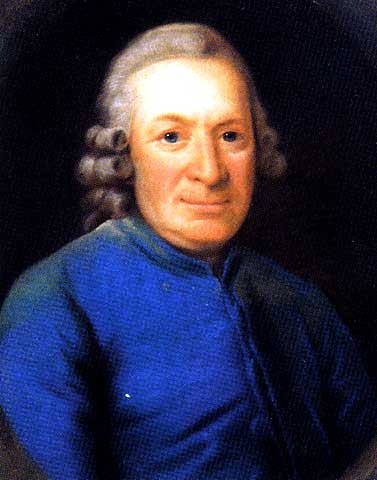
In any case, what about Salomone Fiorention's translation? As it happens, the siddur of Salomone Fiorentino (1742-1815), who was a famous poet in Italy, was printed in 1825 and is online. Here is a picture of Fiorentino, followed by the title page of his siddur:


How did he translate mei raglayim? Not suprisingly, at this point, the answer is according to the tradition, which will not countenance the literal meaning:


His translation is "eppure l'acqua di Raglaim avrian prodotto l'istesso effetto?" while Shadal's is "eppure le acque del fonte Raglaim sarebbero state piu efficaci?" Same idea, different words.

You can see that Fiorentino included a footnote marked (d) - this is one of exactly nine footnotes in the siddur!


The gist of what he writes here is that Raglaim are potent, acidic waters. If I understand him correctly he is saying that although this isn't the plain sense of the term, many writers insist that these foul waters were produced by a fountain called Raglaim, which had the potency of the hard root of the Ziporen. Although, as we have seen, the most famous source for this explanation is in the Kol Bo, he does not cite it. Yet in the prior footnote he cites Col Bo in explaining יין קפריסין.

Thursday, May 19, 2011

More mei raglayim-urine; in the Italian tradition and others.

Perhaps this is overkill, but I came across a couple of additional sources on translating or not translating mei raglayim (see part I from 2007 and part II from 6 weeks ago, and part III from 2 weeks ago).

The following example is f rom David De Sola Pool's version. This is from the 2nd edition of his Prayers for the Day of Atonement According to the Custom of the Spanish and Portuguese Jews (New York 5704/ 1943). I apologize for the awful quality of the photograph:


As you can see, his translation says "Though mey raglayim might have been adapted for that purpose, it was not used . . . " I came across a certain English mahzor from the 1860s which similarly read "meiraglayim" (one word, no italics).

Next is from an Italian machzor published in Trieste, 1928. Here is the title page:


This is interesting because "Prof. Israele Zolli, the Rabbino Maggiore di Trieste" was later the Chief Rabbi (Rabbino Maggiore) of Rome and infamously converted to Catholicism after WWII.

In his machzor, although the Hebrew side is quite complete and correct, he simply did not translate anything beyond כדי לשרות בו את הצפורן כדי שתהא עזה. That's what the red line indicates. Problem solved!


Here's the Hebrew side:


Speaking of Italian machzorim, here is a page from Lazzaro Ottolenghi's Livorno edition and translation of the machzor:


As you can see, it translated mei raglayim as "le acque del font Raglaim," water from the spring called Raglaim (as per the Kol Bo). Incidentally, many people think this machzor is from 1821 because of the title page. First, let's clear this: R. Lazzaro Ottolenghi was born in 1820, so he didn't print a machzor in 1821. Here is that title page:


As you can see, the enlarged letters in the chronogram add up to 581, so this ought to be 1821. To be honest I'm not sure exactly what year it was printed, but it's not a mistake. Rather it is a reprint of a machzor with Italian translation that was printed in Vienna between 1821 and 1829. This mahzor was produced as per the requirement of the Austrian government, printed under the name of R. Eliezer Halevi ab"d of Trieste, but translated by his pupil Shadal. With this work the latter began to achieve fame in Italy.

A clue as to the date of Ottolenghi's machzor is the mi sheberach it included, for Ferdinand III, who died in 1824.

Here it is:


I guess it's a little odd to reprint such a thing in a machzor some 40 (?) years later, but then again it indicates that it is being faithful to the original. However, it is also faithful to the original in that Samuel David Luzzatto's name does not appear. How then did he achieve fame because of this translation? According to Shadal himself what happened was that some sheets of his translation was seen in R. Eliezer Halevi's home by Joseph Tivoli, a teacher at the local Talmud Torah, who recognized his handwriting. He was very upset because he was aware of an essay written by Shadal which offered the view that Kohelet was not written by King Solomon. The whole episode is spelled it in detail in Hamaggid 1863 (Vol. 7, #31) pg. 245:


In any case, we can see that 20-year old Shadal translated mei raglayim according to the demure tradition, that is is a spring with the name raglaim. (Bearing in mind that I have not seen the original, but I assume that this whole pilpul is correct and that this is a faithful reprint.)

Finally, in an earlier post I alluded to a letter to and from Louis Ginzberg about the matter. It is printed in R. David Golinkin's The Responsa of Professor Louis Ginzberg. I will post the letter and reply exactly as it appears because it is so interesting from a historical perspective:
ORAH HAIM

No. 5 Some of the Technical Terms found in Pittum Haketoret
(OH 132:2)
Source: LGA, Box 8, "Lasker" file

Congregation Beth Israel
735 McFarlan Street, Flint 4, Michigan
Phone 3 - 3586

Arnold A. Lasker
Rabbi
May 3, 1949

Prof. Louis Ginzberg
Jewish Theological Seminary of America
3080 Broadway
New York 27, N. Y.

Dear Doctor Ginzberg:
There has been something of a controversy raging among some of our worshipers on a Talmudic question. It is so gratifying to have such interest, that I thought I might presume to ask you to settle the question.
The problem involves the Pittum ha-Ketoret and revolves around the use of the words mei raglayim. From every indication it seems to me and to a number of others that it means "urine," but a couple of men have brought siddurim which actually forbid the reader to think that it could possibly mean mei raglayim mamash. One source suggests that it is a herb with that name and because of that name it was regarded as unseemly to bring it into the azarah. In any case, what is the actual effect of soaking onycha in the "mei raglayim?"
What is the basis for translating the Biblical shehelet and the Talmudic tziporen as onycha? Further, how was it permitted to utilize part of an unclean shellfish for such a sacred purpose?
Does the term memulah in the Bible mean salted (with the melah sedomit) or spiced in general? Is the latter the proper interpretation of Onkelos' meorav?
Has there been any progress made in identifying ma'aleh ashan and kipat ha-yarden?
Thank you very much for your attention to these questions.
I trust that you, Mrs. Ginzberg, Sophie and Eli are well.

Sincerely yours,

Arnold A. Lasker

This Year We Build!

===
June 8, 1949

Dear Rabbi Lasker:
Your letter of May 4th reached New York during my absence for several weeks from the city and on my return a sudden inflammation of the eyes got hold of me, which made it quite impossible for me to read a line. Hence the delay in my reply to your letter.
Let me first tell you that your letter gave me a good deal of pleasure for the reason that I often have been asked by congregations whether this or that part of the Prayer Book might be left out. I am, therefore, particularly happy to see that you have in your congregation, people whose interest is in understanding the Prayer Book and not in changing it.
Actually [regarding] the meaning of [מי רגלים] there can be no doubt that it is to be taken literally. As early as the 12th century, attempts have been made to take the phrase in an applied sense, either the name of a particular well or of a certain kind of vegetable, but the contents speak definitely against all these explanations. My son-in-law, who is a professor of biochemistry at the Massachusets Institute of Technology at Cambridge, informed me recently urea has been used in toothpaste with great success. There is, therefore, nothing strange about the statement that they knew in olden times to make some use of the alkaline contents of urea for the purpose mentioned in the Baraita about the preparation of the spices.
The most reliable description of the spices used in the Temple is given by Immanuel Low in Die Flora Der Juden, IV (Vienna 1934), pp. 99[-102]. As this is very likely unavailable in Flint, I am enclosing, herewith, a short paragraph from this book which I think you might find very useful.
With kindest regards.

Very sincerely yours,

Louis Ginzberg


===

I would like to, at this point, acknowledge Rabbi Dr. Morris Margolies, of Kansas City, whose phenomenal book Samuel David Luzzato, Traditionalist Scholar was a great delight to me. Recently I had an email exchange with his daughter, who told me that she remembers from her childhood that her father, Shlita, lived and breathed Shadal and that Shadal seemed like an extra member of the family! She also conveyed my good wishes to him and the fact that his writings from long ago are enjoyed today, which I greatly appreciated.

The Google Book exchange?

Just thinking out loud.

Since I deal with many people who don't live in the United States, I've long realized that many books which are freely available on Google Books are not available outside our land of the free books. (In theory any pre-1923 book which Google has scanned ought to be available according to American copyright laws. Since Mickey Mouse was invented in 1928, Disney makes sure that the copyright status of works created after 1923 are much more stringent.)

However, Google errs on the side of caution and countless books which you can download in America cannot be downloaded in Israel or Europe or Canada. But this is not in conforming with their copyright laws. They're just not available, and probably never will. Worse, I have found that many outside the U.S. do not even realize this. I was thinking, what if there was some location where people outside the United States can ask if such-and-such book, which they cannot download in their country, were available on Google? Then an altruistic American could help them. Hm.

Tuesday, May 17, 2011

Make sure not to confuse one Satanow with another.

This is pretty funny; it's the title page of an edition of Mendel Lefin of Satanov's Cheshbon Hanefesh, where you are told on the title page not to confuse him with Yitzchak Satanov:


The title page information is almost identical with the book's second edition, famously published in Vilna, 1844 at the impetus of R. Yisrael Salanter.[1]


Astute readers will notice that it also credits him with the book Refuot Ha-'am as well as Moda Labina, while the latter alone appears on the title of the 1844 edition. This comes from the title page of the 1937 edition, published by the Association for Slobodka Alumni, which it appears is responsible for removing the word המשכיל, so now it says חברו הרב החכם instead of חברו הרב המשכיל החכם. This in turn carried over to the newer edition, which improved upon that and instead of merely identifying the author by name and his other books, it adds ואין להחליפו ביצחק מסטנוב בן זמננו, "Do not confuse him with Isaac of Satanov, his contemporary."[2]


Satanov, evidently, has a pretty bad reputation. The second Lubavitcher rebbe was quoted in a now-famous letter as quoting his father to the effect that הדעסואי הוא הרע שבנוגה, הירץ וויזל טוב שבנוגה, סטנאב הוא כתר דקליפה. On the other hand, the Pri Megadim - whose haskama to Lefin's 1794 book Refuot Ha-am (which was an adapted translation of Tissot's 1761 popular medical work Avis au peuple sur sa santé - "Advice to People about Health" - is singled out. You can read the Lemberg 1851 edition of this work here. Fortunately Lefin did not translate Tissot's other famous work, L'Onanisme.


However, what many people don't know is that the Pri Megadim probably didn't regard Satanow (the other one) as the Crown of the Klipah. He quotes him many times and according to him, the two of them learned Kuzari and Moreh Nevuchim together in Daniel Itzig's Beis Midrash. Here is Daniel Itzig, by the way


The haskama of the Pri Megadim is in Satanow's Berlin 1795 edition of the Kuzari. He calls Daniel Itzig "Daniel Jafeh," which is also how he was known


To the charge that this haskama is forged, I say that even if it is, it hardly seems likely that Satanow made up the fact that he personally learned with him in view of the fact that they obviously both were denizens of Itzig's Beis Midrash at the same time (1772-73), and the Pri Megadim does in fact quote him numerous times. In fact I know of no real evidence that he forged haskamos. The charge was made by Reggio, amidst an inveighing against the very idea of haskamos as designed for flattery and susceptible to forgeries. The example he gives is Satanow:


In 1836 Franz Delitsch wrote of him, "Unter dem polnischen Kaftan, über den sein Bart herabwallte, trug er die feinste Kleidung eines deutschen petit maître . . .," or, "Under the Polish Kaftan, over his flowing beard, he wore the finest German "petit maître" (i.e., highly stylish clothing)." Many writers seemed to take this as a literal description of him, but I am pretty sure that Delitzsch, who gives no source, was born 8 years after Satanow died, and had a romantic and poetic streak, meant this figuratively.

Getting back to our first Satanov (Mendel Lefin), please see this post, and this one.

[1] I take everyone's word for it, since R. Yisrael's name appears nowhere in the 1844 edition.
[2] However, I'm not certain because there were editions between 1844 and 1937 which I haven't seen and perhaps they merely copied those.

Monday, May 16, 2011

A 182 year old piece of ephemera about a definitely non-ephemeral 185 year old Torah scroll.

This notice of a raffle of a Sefer Torah written by R. Azariah Figo (1579-1647) is from London, 1829. In Scem Aghedolim the Chida writes: "והיה סופר מהיר וכותב ס"ת כתיבה תמה ואני ראיתי ס"ת מכ"י הקדושה כתיבה מהודרת מאד וס"ת מכתיבתו שוה לע"ע סך גדול." Perhaps the scroll he saw was this one!

The Jewish Encylopedia (1906) says "Figo was an excellent scribe, and the scrolls which he wrote are highly prized," which sounds like a fanciful interpretation of the Chida.


From here.

A 1781 aside about Ramchal in a letter from Mendelssohn to Herder.

This is a pretty well-known excerpt from a letter by Moses Mendelssohn to Herder, concerning Rabbi Moshe Chaim Luzzatto.


As you can see, this letter, dated 24 September 1781, says that Mendelssohn promises to send him a copy of
"An allegorical drama. The author lived in Amsterdam about 50 years ago, and was a great genius in many respects. He was unable to develop his talents due to the jealousy of some rabbis, and was treated poorly. He retreated into solitude and died before his time. His Kabbalistic manuscripts are today studied intensely in Poland. He evidently wrote some new Psalms, which I have not had an opportunity to see."
The "allegorical drama" is obviously לישרים תהלה, which had been printed in a very limited run Amsterdam in 1743, and then reprinted by Mendelssohn's colleague Solomon Dubno in 1780. Dubno had spent several years in Amsterdam before coming to Berlin, and there he became acquainted with the writings of Ramhal through his students, such as David Franco Mendes. He really loved this particular play - which was written in honor of someone's wedding. Dubno reprinted it because it was so rare. He writes that לא הדפיס ממנו רק חמישים ספרים ולא הובאו כי אם אל אוצרות הגבירים הספרדים שבאמשטרדם יצ"ו.

Funny how things work - the original 1743 edition, of which only 50 copies were printed, is available online, while the 1780 reprint is not.

The Psalms of which Mendelssohn writes are a series of 150 Psalms that Ramchal wrote when he was about 20 years old. They caused him no small amount of trouble, as it was seen as some sort of attempt to supplant the actual book of Psalms. To my knowledge it was never printed and may not have even survived. However, two were printed in Bikkure Ha-'ittim in 1825 and 1826. Here they are:


The reference to the Kabbalistic manuscripts being studied intently in Poland is because Ramhal's Vilna-born Paduan medical student pupil Yekusiel Gordon was responsible for disseminating many of his manuscripts in Brisk and elsewhere in his native Lithuania.

Thursday, May 12, 2011

A controversial Hebrew essay on the age of man; also, dinosaurs and mammoths in 19th century Hebrew literature.

Here's an interesting article that created a bit of a storm when it first appeared in 1865 in Avraham Uri Kovner's book Cheker Davar. Titled ?כמה שני מציאות האדם על פני האדמה, or, How Many Years Has Man Existed on Earth?, the essay explained the point of view of modern science and obviously concluded that the answer to the question is considerably more than 5625 years.


(See the end for the entire essay, which is based extensively on Schleiden. To give a picture of the state of education of the time, Kovner felt compelled to explain paranthetically what "geology" means. There's also a section on the Mississippi Delta.)

Here is the man himself:


At the time Kovner (1841-1909) was regarded as a sort of literary pain in the neck in Haskalah circles, writing severely critical and disrespectful things about some of its heroes. Furthermore, the moderate Maskilim were religious and Kovner was not. In his early twenties he had already had a failed marriage, Kovner found himself and became an outsider in many ways. Eventually he ran into very big trouble by forging his boss's signature on a check from the bank in which he worked and was sentenced to jail for four years, during which time he initiated a correspondence with Dostoevsky. Eventually he converted to Christianity when he married a young Russian girl whom, I suppose, was not going to go to our side. So it is clear that the progression from science to bank robbery to apostasy is established.

To give an illustration of how unusual his view was at the time, simply accepting the science of geology, consider by contrast the way in which Chaim Selig Slonimsky introduced dinosaurs to the readers of Hazefirah in 1878 - תמונת מין עקרב מעופף אשר נתקשה לאבן מימי המבול, "A picture of a winged scorpionesque creature, which hardened to stone in the Flood."


As you can see, without much fanfare Slonimski declared that dinosaur fossils are from the time of the flood.

In another issue an article on dinosaurs was called השרידים מדור המבול, or The Remains from the Period of the Flood. This one included pictures like the following:

Incidentally I am well aware of Jeffrey C. Blutinger's very good article "Creatures from Before the Flood: Reconciling Science and Genesis in the Pages of a 19th-Century Hebrew Newspaper" (Jewish Social Studies n.s. 16.2 Winter 2010). This just goes to illustrate the you-snooze-you-lose principle, since I had these articles and images on my hard drive before his article appeared (although perhaps not before he was writing it) so it could have been my scoop! In any case, his article is a must-read for the context of these pieces in Hatzefirah and the scientific consensus of the period. Also be sure to read it to find out about how Slonimsky dealt with Darwin (rejection) and how to explain "cave men" if all humans are really the sons of Adam and Eve.


Detail of the biggest mammoth no one ever saw:


Incidentally, while R. Jacob Lipschutz's famous essay, published in 1845, mentioned mammoths and their apparent great age - see an excerpt


less well known is Shadal's comment building upon the discovery of mammoths. He apparently felt that such discoveries portend the possible finding of fossilized giant humans. To give Dan Klein's skilled translation:
The existence of a few giants of abnormally tall men cannot be denied: Moses mentions Og; [Joshua's] spies mention Ahiman, Sheshai, and Talmai; in Samuel we find Goliath and others. Besides the testimony of the Bible, we now see bones of elephants and other [ancient] animals in the bowels of the earth, and scholars say that the animals to which these bones belonged were as large as elephants. It may well be that besides those animals that have been discovered up to now, some human beings as large as "elephants," from our point of view, will be found as well.

Speaking of elephants, here is a curiosity from 1841. The book is called Toledot Ha-aretz and the author is Joseph Schönhak. It is a natural history book in the light of Torah. It contains letters of blessing from R. Jacob Zvi Meklenburg, Slonimsky's father-in-law Abraham Stern, and approbations from four rabbis.


As you can see, the author explains that the Hebrew word for elephant, pil, is also the name for this animal in Arabic and Aramaic. However, in Ethiopic it is called "habah" and it from this that Hebrew derives its word for the elephant's ivory tusk, shenhav. (He means to say that it's a composite of the Hebrew word shen, tooth, and the cognate term hab, which means ivory in a related language; however, in an Amharic dictionary I found that it says that tole or nage is the word for elephant). This is in accordance with what is written in I Kings 10:22 and II Chronicles 9:21, that Solomon imported shenhabim, ivory, from Ophir. (This is a strange mistake. It says that he imported gold from Ophir, but ivory from Tarshish.) The Targum translates shenhabim as "an elephant's tooth." Here is a powerful proof that the land of Ophir is not in America (עמעריק"א) as many believe, because there are no elephants to be found there; elephants are only in eastern lands.

Ironically, mammoths were discovered in America, as R. Lipschutz's pointed out only 4 years later - in Baltimore, in 1807. Of course that isn't relevant to Kings Solomon's time when, presumably, there were no elephants in America. Of course the Bible said that the ivory came from Tarshish . . .

Here is the complete essay "How Many Years Has Man Existed on Earth?" by Avraham Uri Kovner:

Merchants

Here's an interesting picture called Die Polacken/ Les Polonais by George Emanuel Opiz (1775-1841) depicting Jews coming to the famous Leipzig fair in the 1820s (I think).

Wednesday, May 11, 2011

Beyond the Dikdukei Soferim - A Powerful Free Tool for DIY Talmudic Text Research - a guest post by Leor Jacobi

A powerful resource for Talmudic research is now available freely on-line. The latest version of Eidei Nusah. This site contains the text of almost all manuscripts of the Talmud Bavli. Previous versions were available on CD-ROM. Many geniza fragments have been added to this version. Some actual images of Talmud and Mishna manuscripts are also available.

Many of my own studies would have been practically impossible without heavily utilizing previous versions of this database. Obtaining microfilms of these texts, locating the desired texts contained therein, and then deciphering them are daunting tasks for even the best of scholars. The time investment involved prohibits everyone from fully exploring manuscripts in most cases. As a result, in the past, most talmudic scholars have relied almost solely on the monumental Diqduqei Sofrim of Rav R.N.N. Rabinovicz. However, it should be noted that this database contains several times more manuscripts than those available in the 19th century, and that many of these “new” Eastern, Yemenite, and Geniza manuscripts are simply much more accurate than those European ones previously utilized, literally of a higher class.

Now, in a few mere moments one can obtain significantly more and higher quality information than could have been acquired in many excruciating hours. Furthermore, the database can be searched powerfully to yield much more textual information than could ever have been found before.

Allow me to provide a simple tip for utilizing this database which serve as an illustration. When searching for all the variants of a particular text, it is most prudent to search not for the text itself in which variations appear, but rather, for a text located near the words in question which is more likely to be found in many or all of the manuscripts. Then, one receives an output list of results which will probably contain more of the variant readings. An added side-benefit of this method is that, if cleverly exploited, it often enables one to instantly obtain results from parallels located in other locations in the Talmud which the researcher may or may not be aware of. In fact, many sugyot of the Talmud which relate to sugyot of different tractates are often repeated in more than one location, especially where the Talmud undertakes comparisons of laws from different branches of Jewish Law. This is a very familiar phenomena, especially well attested to in the Talmud Yerushalmi (whose manuscripts are unfortunately not yet contained in this version). There is occasionally significant variation among talmudic manuscripts as to the length of certain texts, particularly when it appears that one sugya is quoting another. Manuscripts may contain a version of a sugya that one may be interested in, but not in the location that we are familiar with from working with printed versions of the Talmud. הפוך בה והפוך בה.

The text of the manuscripts has been painstakingly typed in by hand. I have personally checked a considerable number of these texts against photo images found on the Hebrew University manuscript site and I have found them to be highly accurate. However, the user should be warned that, as would be expected, in a small minority of cases there is considerable room to debate the particular readings, but this is primarily restricted to individual letters such as ד and ר in locations where texts have been erased or substituted, always well indicated by a proliferation of square and round parenthesis indicating added and original texts.

A desideratum would be basic bibliographic information on the various manuscripts and fragments. The most important would be country or region of origin. One is currently reduced to checking obsolete and incomplete lists of manuscripts or taking a stab by viewing an actual sample photo image. However, this drawback of the anonymous, generic nature “pure” computerized text is indeed a small price to pay for the ability to search and compare texts automatically.

It would be considerably more efficient if the site would enable the reader to open all manuscripts of a particular folio at the click of a button, rather than manually opening up each one. Indeed, this process is considerably more cumbersome now than on the previous version 5 on CD-ROM. I suspect that most users are more interested in always seeing all variants of a particular page while using the Browse feature than in ever selecting from particular manuscripts. Only while using the Search feature is the user interested in which particular manuscripts are returned as the result of a query.

Basic access to the site is free of charge. All information is briefly viewable, but one must subscribe for a fee in order to copy freely and view and print texts at leisure. The casual user can make do by making a “screen-shot” of a particular text before the viewing time expires, and then recopying that text by hand as required. The frequent user will no doubt benefit greatly by subscribing and supporting this project expand and in turn make more manuscripts publicly available, and perhaps most importantly, practically usable and useful.

Superficial study of the words of the sages of the Talmud Bavli without even a minimum of verification that their words were recorded accurately can now no longer be excused. The lens has been focused and placed in the public domain. Thanks are due to the Lieberman Institute for providing these tools to the entire gamut of those engaged in in-depth study of the Talmud.

Tuesday, May 10, 2011

What's the difference between

proud Americans of the Jewish faith and germans of the mosaic persuasion?

I guess you have to know the narrative in order to follow it?

An 1850s response to biblical criticism in Yitzchak Baer Levinsohn's Guide to the Perplexed.

In 1839 Isaac Baer Levinsohn printed his book Beis Yehuda, which he had written ten years earlier. It was a sort of history of and explanation about Judaism and a sequel to his Te'uda Be-yisrael. (It's the book which I quoted in one of my favorite posts, about the word "daven.") Ostensibly written in answer to queries from an official of the Russian government - the questions are in the beginning; indeed, the book is subtitled "Collected responses which I sent on 1 Iyyar 1837 to the great scholar and Nobleman, the wonderful Christian teacher, Immanuel Liven" - it was in reality nothing of the sort and Immanuel Liven wasn't a real person.

What happened was that once Levinsohn sent his sheets to the printer and word got out what was contained within them the rabbis became upset. The printer then refused to print it. So Levinsohn, in his letter to some of the rabbis opposed to the book, told them that the aforementioned government official had asked him those questions, and this was his responses. The person didn't exist, but his name was very similar to the actual minister of education, so the opposition was withdrawn. These facts arise from a letter printed 36 years after his death, where he explains to a friend what had happened.

I think it's reasonable to note that it was not, evidently, the content of the answers per se which were opposed, but the very format in which they were discussed together. After all, once it was "known" that the questions were posed by the government, if the answers were totally objectionable then how could opposition to it be withdrawn? I think the problem was a book of this style was not appreciated, much the way contemporary books raising questions and giving answers in accordance with classical and traditional sources may well be opposed. Perhaps you will agree with me once you read the questions (at the end).

Interestingly, when it was reprinted in 1859 I noticed that it included an interesting footnote that was not present in the first edition (1839). It says page 579, but it's really 179. Here it is:


and by comparison, here is the same passage, without the footnote, in 1839:


As you can see, the footnote attempts to refute nascent biblical criticism, specifically the idea that Ezra really wrote the Torah, not Moshe. It should be noted that nothing had changed in Western European bible scholarship between 1839 and 1859 in the sense that in 1839 it was accepted that Moses wrote the Torah, but not in 1859. On the contrary. So my guess is that what had changed in those 20 years is what Jews in Eastern Europe had been, or could have been, reading.

Levinsohn provides four objections to the suggestion that the Torah is the work of Ezra. They are

1) The Samaritan Torah is in essence the same as ours, except for some minor differences, including many that are clearly intentional changes. The Samaritans arrived on the scene some 200 years before Ezra, and there was great mutual hatred between them and the Jews, and especially between them and Ezra.

2) How could Ezra have fooled the remnants of the Kohanim and Levi'im, who were the elders and sages of the generation? Even after the building of the Second Temple there were many elders among them who remembered the First Temple. They knew the Torah and its commandments, and were raised on it. Furthermore, Chagai, Zechariah and Malachai, Daniel, Chanania, Mishal, Azariah, Nechemia, Mordechai and Zerubavel were around, and these knew Yirmiyahu, Yechezkel and Baruch.

3) All the books of the Early and Later Prophets, and the Hagiographa, are intimately tied to one another, and all are connected with the Torah of Moshe, and its commandments and narratives. Those who argue that Ezra wrote the Torah implicitly must claim that these books and Psalms, and Proverbs, all were written by Ezra. It is also known that every prophet and writer and poet has a distinct writing style, and all differ greatly in terms of clarity, strengths, etc. So how could Ezra have written so much literature in so many styles?

4) Isn't the books of Ezra and most of Chronicles, which were written by Ezra, written in a different style from the Torah and the Prophets? Not only that, Ezra's writings are inferior in quality.

All these responses are sufficient to shut the mouths of these allegedly wise men who sow doubt amongst people, says Levinsohn.

================================

Here is a vintage postcard (?) of Levinsohn who, incidentally, considered his greatest works to be his works against the blood libel (Efes Damim) and against Alexander McCaul's Old Paths, the 19th century's most successful and widely disseminated missionary attack on Judaism (Zerubavel):


================================

Here are the questions which the book is supposed to answer - and, incidentally, after the 1858 edition the subsequent editions do not even give the questions:

1) What are the fundamentals of the faith of the religion of Moses according to the Talmudic rabbis and their counterparts among the rabbis who followed them?

2) Is it true that the Jews possess books that are earlier in time than the Torah? If this is the case, why didn't Moses or another prophet mention them?

3) With which form of script was the Torah written?

4) Are they other books apart from the Bible, but from the same period?

5) Is it true that the commandments in the Torah, according to the view of the Talmudic rabbis, lack any rational explanation? If so, what about the fact that the Torah itself gives reasons for many mitzvos?

6) Is it true that the Talmudic and later rabbis considered the commandments in the Torah regarding behavior between people, to apply only concerning Jews, but not people of other religions? Is it permitted for a Jew to to do any bad thing to a non-Jews, particularly against Christians whom they harbor a great hatred toward; that it is even a mitzvah to wrong them?

7) What is the Talmud like? What's it about? What can it be compared to? Which time and place and in what language is it?

8) Which books are considered "the Talmud"? Do you have other books considered to be as important? If so, who wrote them and what are they about?

9) Are there wise things in the Talmud? Because rumor has it that it is filled with disgusting things and baseless, irrational stories?

10) How did the sages of the Talmud permit themselves to add and subtract from the commandments of the Torah, to the extent that today the rule of the Torah appears different from what is inside it, although the Torah says one may not add or subtract from it? And many of these things are built upon explanations of the verses which go against the plain meaning of the text and the rules of the Hebrew language? And an amazing thing - the sages did not enact leniencies, only stringencies?

11) Are there any remnants today of the Jewish sects which were around during the Second Temple period? What are the Karaites? When did they begin?

12) Is it true that today there are Jews of the sect of the Pharisees of the Second Temple period?

13) What are these millions of laws and fences which you are concerned with all your days?

14) Who enacted millions of baseless customs, and is there not a spirit of idolatry in them? What is the Pesach Seder like, with all its practices, about which Jews were at times suspected of consuming the blood of Christians on that night?

15) Is it true that in the Jewish books there are passages against the Christian religion in general, against its savior and apostles, which generate great hatred against us [Christians] and against the relgion in general, and our Messiah in particular? This is alleged by many Jews who converted, and by certain Christian writers.

16) Is it true that according to the Talmud and related rabbinic literature to learn foreign languages, or secular wisdom, or mathematics, of farming and the like? This is what many Jewish scholars who converted allege in their books. Similarly, such is alleged by born Christians who have mastered the Talmud and rabbinic literature - specifically the Italian priest Chiarini, who tried to translate the Talmud into French in order to prove to everyone that the Talmud is that cause of every aforementioned bad habit of the Jews. Furthermore, we see that today's Karaites, who did not accept the Talmud, are very honest men, for they pursue the Torah of Moses alone, a Torah of truth which is in their mouth, the source of which is the living God, master of the universe. Apparently this priest admired them very much. We see that they are multilingual, whereas the greatest rabbis do not even know the vernacular of their country, and certainly no foreign language, and a fortiori secular knowledge they do not know, and all the more so the masses of Jews. For it is prohibited according to Talmudic law? Is it true that you don't have any thinkers or farmers? If one were to teach them languages or some sort of wisdom, is it true that in your view they are heretics and excluded from the grouping of the Jews?

17) Who established the prayers of the Jews? What are they like?

18) Who established the melodies for prayers which seem to have no order and whomever hears them believes they hear wailing? Why are there many small minyanim? Isn't it better to pray together in one synagogue? Do you not conduct yourself frivolously in the synagogue?

19) Is it true that your prayers contain content against believers of other faiths?

20) What is the Zohar? Who wrote it? What is Kabbalah, both theoretical and practical? Who originated it? When?

21) What is the "Shechina"? What are Kelipos and Satanim? What are the 'secrets,
the kavvanot and the kabbalistic names?

22) Is it true that the Zohar and the Kabbalists consider the Torah of Moses to be entirely allegorical, both in its commandments and in its narratives?

23) Is it true that the Zohar contains material opposed to the religion of the Talmud? And that it took some of its principles from other religions? That it's holier in your eyes and more accepted than the Talmud, for it is believed that its teachings come from Elijah the Prophet, angels and God Himself? It is alleged that it contains much that is far stranger than things in the Talmud, and practices that are bizarre to God and man?

24) Is it true what I heard from one rabbi, a great Kabbalist, famed among the Jews, who derived from the Kabbalah the Christian belief in the Trinity, which can be found in the Zohar and other Kabbalistic books?

25) Are they secular books of learning among the Jews? Who wrote them? When? What do the masses think of them and their authors? After all, without a doubt the masses must consider them to be opposed by the Talmudists and the rabbis?

26) Do the Jews have schools of secular learning?

27) Is it true that the faith of Shabbetai Zvi still exists today?

28) Is it true that the Shabbatian faith is premised on the Zohar and Kabbalah?

29) Are there good takkanot which Jews established for the benefit of their poor, their sick and their poor students? Are there today schools for those in need?

30) What about the Chassidim of this country? Who established them and when? Which cities are they found? Do they have separatist synagogues?

31) How many sects are they divided into today?

32) Are there still new sects being established among the Jews these days?

33) Is there yet hope that the Jews will be able to repair many of their ills? How?

34) What is the Messiah which they hope and pray for? Who is the Messiah, son of Joseph, who will be killed? If it is true that they hope to rule the world when their Messiah comes? Is it true that because of the belief in the Messiah the Jews do not labor for the good of the country which they live in? Is it not for this reason that many monarchs will not give them citizenship?

35) How can Jews become closer to the Christians, if the Jews distance themselves from them every way possible? If it is prohibited, as I wrote, according to the Talmud to learn any language or secular subject, or even manners? And all the customs which Jews learn from their babyhood, even good ones, aren't their instances where they ought to accept good customs and manners of the nations?

================================

You can see that these "questions" are designed to elicit the answers, i.e., the discussions in the book. For example, what kind of questions are the 2nd and 4th one? Clearly they are meant to generate a discussion about the books mentioned in the Torah and other Prophets, which we do not possess, as well as the Apocrypha.

Lest one thinks from the content of these questions that Levinsohn's book is a gigantic attack on rabbinic Judaism, it is nothing of the sort. It is a defense of it. The antisemitism and so forth was highly plausible in the mouth of a Russian official, and Levinsohn's points were that the answer to questions of the "Aren't the Jews just awful?" sort is no, to the contrary. Is it true that the Jews are forbidden to learn languages? No, on the contrary, etc.

Monday, May 09, 2011

Maimonides and his faithful frum servant Peter.

If you are like me, there is a good chance that you heard the following legend concerning Maimonides as a child. My version:
Maimonides was suspected of heresy by the rabbis of Spain. The rabbis of Germany decided to send an emissary to meet him personally and see if the charges were founded (I know!). They sent a Rabbi Meir. Upon arriving, Rabbi Meir was, uh, perplexed at the things he witnessed in the Maimonides household. First, a servant placed food which looked like human hands on the table. Secondly, the Rambam summoned another servant, named Peter, to fetch wine for the guest. Finally, Maimonides ordered that a calf be slaughtered for him in a quite unlawful fashion. Completely shocked at the obviously unkosher food (human hands, wine served by a non-Jew, and unschechted meat) Rabbi Meir managed to mumble excuses and didn't eat. Later Maimonides approached him and asked him his impressions. Not being able to answer for fear of offending his host, but obviously assuming that Maimonides was guilty of preparing the treifest of treif dishes, the Rambam explained. First of all, the human hand was a special kind of vegetable which only looks like it is a human hand. Secondly, his faithful servant Peter is Jewish. Hasn't Rabbi Meir ever heard of the Talmudic sage Rabbi Yose ben Patrus? Thirdly, the calf was removed from the womb of a pregnant cow that was slaughtered according to halacha. As you know, the law is that such a calf does not need to be slaughtered according to the method of shechita. Rabbi Meir understood the lesson: do not jump to conclusions about other people without understanding the complete picture. Having learned this great lesson, he returned to Germany and reported that the Rambam is no heretic.
This is only the quickie version. A more fleshed-out version of the story can be read here. If you are like me, you probably read this story in the Tales of the Geonim section of the Jewish Press. Perhaps you read it in Nathan Ausubel's Treasury of Jewish Folklore, or even in Moses Gaster's Ma'aseh Book. I somehow remember someone trying to explain that the food which looked like a hand must have been asparagus. Apparently taking this story as historical, someone suggests that it was a Chinese citron which is, admittedly, a pretty crazy etrog (also known as Buddha's hand):


The aforementioned Ma'aseh Book is in fact the written source of this story[1].

The Ma'aseh Buch was first printed in Basel in 1602. It is a compendium of nearly 300 stories from the Talmud, Midrashim and later sources. For example, there are many stories about Rabbi Yehuda Ha-chassid, and some about Rashi. Some of them are from known written works, others seem to have been passed down orally (or invented). Here is the title page:


As you can see, the full title was Ein Schein Maaseh Buch ("A Beautiful Story Book"). The title page begins by asking the "dear Men and Women to come here" and peruse the book. The stories, it says, are all from the Gemara, with some from the Midrash Rabbos, Bachya, and that the stories about Rabbi Yehuda Ha-chassid are not to be missed. In addition, there are stories from the Sefer Chassidim, Sefer Mussar and the Yalkut. Then comes a great line: איר ליבן ארויאן איר האט פון דיא טייטשי ביכר אל ואר איצונדר האט איר אך דיא טייטשי גמרא / Dear ladies, you already had German books; now you will have the German Gemara! And who published it? A Litvak. Okay - he was from Mezerich.

Interestingly, on the inside page are some other words explaining that the hope is that the reader will read this pious book, but not read from the Book of Cows. The reference it to the קויא בוך, which was printed in Verona a few years earlier, in 1595. Evidently the Cow Book was popular enough that the compiler of the Story Book hoped that it would supplant the other in popularity. In addition and in particular, it was hoped that such books would not be read on Shabbos. The publisher advises women to buy it quickly before it sells out. Here is the Koy Buch's title page:


I don't know how many copies of the 1602 Maaseh Buch there are, but the first edition of this book would seem to be incredibly rare. In a late 19th century catalog of the Bodleian Library I saw it claimed that only one copy was known (its copy). A few decades later Israel Zinberg writes in History of Jewish Literature that there are three known copies. For all I know a few more have turned up. In addition, there are extant a couple of manuscripts of the book. Gaster's English translation (1934) was preceded by Bertha Pappenheim's translation of the 1723 Amsterdam edition into German (which you can read here).

In any case, here is the story about the Rambam as it appeared in the 1703(?) ורנקבורט edition (click to enlarge):


Some random tidbits. Throughout this version (and three other Maseeh Buchs I looked at) the Rambam is called רבי משה מיימנו. No, that is not a typo. מיימנו. Evidently for the not-so-learned audience, just who he is is explained very carefully. He is a "Gevaltiger Herr in der Torah." As in the Jewish Press version, the story takes place in Spain (which the Rambam fled as a young man). The משרת, or servant, is called פיטר (so all those fancy versions which call him Patros aren't actually being faithful to the source). Not surprisingly he is not called a גוי but איין כותי, a "Samaritan." The Rambam informs Rabbi Meir that Peter is not only Jewish, but he is איין פרומר יוד, he is a pious Jew! The identity of the Talmudic rabbi named Peter (the father, really) is not given. Rather, we are told that a talmid chochom in the Gemara was called Rabbi Peter. After asserting that this Rabbi Meir is the one who coined the famous aporophism that "From Moshe to Moshe there was none like Moshe," at the end the reader is exhorted that חושד בכשרים לוקה בגופו, for suspecting the innocent, the penalty is flogging.

Here is the title page:


Incidentally, the Maaseh Buch was so interesting and so popular, that only a few years after it was printed Christoph Helwig translated dozens of its stories, in two volumes (1611 and 1617) called the Juedischer Historien der Thalmudischer Rabbinischer wunderbarlicher Legenden. Interestingly, while the Maaseh Buch does not carefully list its sources, Helwig apparently researched them, because he gives the rabbinic source of each legend. Before each story he gives the number that it appears in the Maaseh Buch and its source in the Talmud or Midrash, if there is one. In case anyone was wondering, the Rambam story is supposed to be #200. Unfortunately Helwig left it out (but see the note [1]). By the time of the Frankfurt 1703 edition, which I used, it is #214! The Maaseh Buch grew some maasehs. Here is Helwig's title page:


In case anyone thought that the idea that the content and doings of a Chassidisher newspaper in New York can quickly become general knowledge is something new (for example), one should consider that many oral tales of the Jews were already available in translation only 9 years after their first printing. The pace may have quickened, but the concept is really the same.

[1] Or the supplement Ma'asei Adonoi, which was subsequently incorporated in later editions. Since I could not see the original 1602 edition of the Ma'aseh Buch, or a copy of Ma'asei Adonoi, I'm not sure where it first appears. Steinschneider in his article on the Maaseh Buch in Serapaeum seems to say that it's in the original, but I'm not 100% sure.

Thursday, May 05, 2011

What the British Chief Rabbi was allowed and not allowed to do in 1827.

New HebrewBooks update, more fun stuff. This time there are several Takkanos (regulations) books, such as the following one.

Printed in 1827, the Laws of the Congregation of the Great Synagogue, Duke's Place, London (A. M. 5587), or, תקנות לעדת ישורון דק"ק בהכ"נ הגדולה דוקס פלעהס בלאנדאן, are the revised statutes of this center of Ashkenazic Jewish life in England (or at least it's elite).

This edition (revised from prior ones) is interesting because for the first time it was translated to English (the text is in Hebrew and in English). Contrast it with the 1791 edition, with only a few English words in sight. That text is almost entirely in Yiddish - plus small amounts of Hebrew, with occasional English words, by my count 10. They are:

Resolutions,
Auditors,
the casting vote,
Minute Book,
Quorum,
Hearse Driver,
Suspend,
Emoluments,
Extract and
Proxy.

The 1827 one has this very interesting one:


I will post all the regulations concerning the rabbi. The one I just showed is #163, for non-Hebraist readers. I will also show the entire regulation concerning the appointment and regulations of the chief rabbi since, after all, the appointment of rabbis is so interesting. If there's one thing everyone can agree on, it's that.

As you can see, #163 (in Hebrew, above) states that the Chief Rabbi is not empowered to enact a cherem against any person without the consent of the Commitee. Interestingly, #161 says that "In case the Chief Rabbi should think to confer the degree of חבר or מורינו on any Member of the Congregation, it is expedient that he obtain the concurrence of the Wardens thereto." That is, the granting of semicha in its greater or lesser form (in case the Chief Rabbi should think to do so) must be approved. Ouch. No wonder the Chief Rabbi of that time preferred to sit and learn all day.

Another regulation concerns the responsibility of the Chief Rabbi to conduct investigations into unspecified bad rumors about potential brides or grooms, and then has the right to decline to perform the marriage; instead he may hand it off to someone else (subject to approval). Read the rest, concerning his other duties, privileges and responsibilities. Indeed, read the entire book. And you thought your shul was a pain in the neck?

LinkWithin

Related Posts with Thumbnails
'